




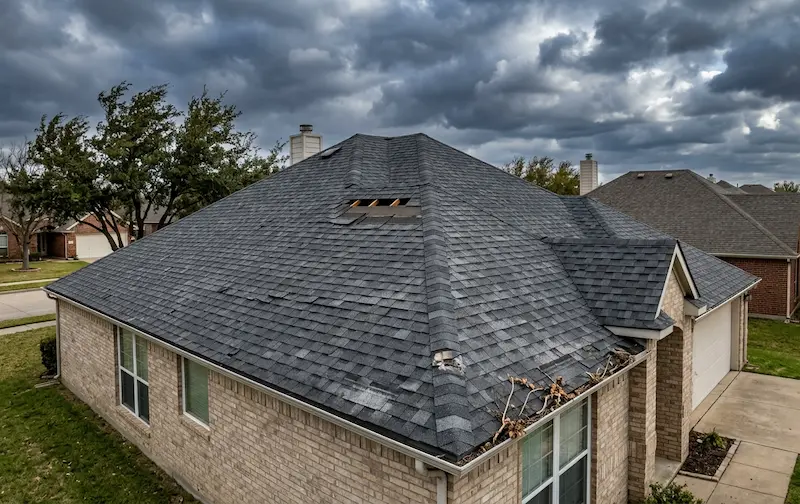
Wind damage is one of the easiest roofing problems to overlook. After a storm, many homeowners step outside, glance at the roof from the driveway, and assume everything is fine because they do not see shingles scattered across the lawn. The problem is that wind damage does not always start with shingles blowing completely off the roof. In many cases, it begins with subtle lifting, creasing, broken seals, or loosened edges that are easy to miss until a leak appears.
If you are trying to figure out how to identify wind damage on roof shingles, the key is knowing what signs to look for and where damage usually begins. Wind can weaken shingles gradually or all at once, especially around roof edges, ridges, valleys, and flashing. Once the seal is broken, the affected shingle becomes more vulnerable every time the next storm rolls through.
In our experience with storm-related roof inspections, homeowners often call only after water stains show up on the ceiling. By that point, the original wind damage may have happened days or even weeks earlier. That is why learning how to spot wind damaged shingles early can save you from more expensive repairs later.
This guide walks through the most common signs of wind damage on roof shingles, how to distinguish storm damage from normal aging, and what to do next if you suspect your roof has been affected.
Why Wind Damage to Shingles Is Easy to Miss
Wind damage is deceptive because it is not always dramatic. A roof can look mostly intact from the ground while still having shingles that have lifted, loosened, or lost their seal. That hidden damage matters because shingles are designed to work as a system. Once wind compromises one section, water can begin working underneath the roofing materials.
How wind breaks the shingle seal
Most asphalt shingles are installed with a sealant strip that helps them adhere to the shingle below. Strong gusts can break that bond. Once that happens, the shingle tab may lift repeatedly during future windy conditions. Even if it lays back down afterward, it may no longer be properly sealed.
This is where a lot of hidden wind damage starts. A shingle does not need to be missing to be damaged. If the adhesive strip has failed, that section of roof is already more vulnerable to water intrusion, creasing, and eventual blow-off.
Why edges, corners, and ridges are most vulnerable
Wind pressure tends to hit certain areas harder than others. Roof edges, eaves, corners, ridges, and exposed slopes are often the first places where shingles begin to loosen. These areas catch uplift forces more directly, which is why visible wind damage often starts there before spreading inward.
On storm inspections, these are some of the first areas roofing professionals check because they reveal early evidence of trouble. A homeowner looking from the ground may not notice much, but a closer inspection often shows tabs lifting, ridge cap wear, or flashing movement around roof penetrations.
9 Signs of Wind Damage on Roof Shingles
When people ask what wind damage looks like on shingles, they usually expect one obvious answer. In reality, wind damage shows up in several ways. Some signs are external and visible from the ground, while others appear inside the home.
Missing shingles or bare spots
This is the most obvious sign. If you can see sections of roof where shingles are completely gone, that is clear storm damage. Missing shingles expose the underlayment or roof deck and leave the home much more vulnerable to leaks.
Sometimes the missing piece is only a tab rather than the full shingle. Even partial loss matters. A small bare patch can still allow water intrusion and signal that surrounding shingles may also be loose.
Lifted shingle tabs
Lifted tabs are one of the classic signs of wind damaged shingles. From the ground, they may appear uneven, misaligned, or slightly raised compared to the rest of the roof. On closer inspection, a lifted shingle may bend more easily than it should or fail to sit flat against the surface.
This type of damage is important because it often comes before shingles tear off entirely. A roof with lifted tabs may survive one storm and then fail during the next one.
Creased shingles
A creased shingle is a strong indicator of wind uplift. When wind lifts a shingle tab and then bends it sharply, a horizontal or diagonal crease can form. These creases weaken the shingle and make it much more likely to tear away later.
This is one of the biggest signs professionals look for after high winds because it suggests the shingle was forcibly lifted. Creasing is different from general aging because it usually appears as a distinct stress line rather than gradual wear.
Curled or buckled shingles after a storm
Curling can happen from age, heat, or poor attic ventilation, but after a wind event it can also indicate that shingles have been loosened or disturbed. If you notice an area that suddenly looks uneven or raised after a storm, that change deserves attention.
The important question is timing. If the roof looked uniform before high winds and now has buckled or lifted sections, wind may be the cause. That is especially true when the issue appears in a concentrated area rather than evenly across the entire roof.
Granules collecting in gutters
Granule loss is another clue. Asphalt shingles shed some granules naturally as they age, but storms can accelerate that process. If you find an unusual amount of shingle granules in your gutters or downspouts after a wind event, it may mean the protective surface of the shingles has been compromised.
Granule loss alone does not automatically confirm wind damage, but when it appears along with lifted tabs, missing shingles, or flashing issues, it strengthens the case that your roof took a hit.
Exposed underlayment or roof deck
If wind has peeled back shingles or torn sections loose, you may see underlayment beneath the shingles. In more severe cases, parts of the roof deck may be visible. This is urgent because the protective outer layer is no longer doing its job.
Even small exposed areas can let in moisture. What looks minor from below can become a leak path quickly, especially if more rain follows.
Damaged flashing near chimneys, vents, and valleys
Wind does not only affect shingles. It can also loosen flashing around chimneys, plumbing vents, skylights, and roof valleys. If flashing bends, lifts, or separates, water can enter the roof system even if the shingles themselves still seem mostly intact.
This is one reason storm inspections should not focus only on missing shingles. Some leaks begin because wind shifted the metal components that protect your roof’s most vulnerable transitions.
Debris impact and uneven roof lines
Branches and storm debris can strike the roof during high winds, leaving visible damage or causing shingles to loosen. You might also notice a roof line that suddenly looks uneven or sections that appear rougher than the rest.
That visual inconsistency matters. Wind damage often creates patterns rather than perfectly isolated spots. If one slope looks noticeably different after a storm, there is a reason to investigate further.
Interior water stains or attic moisture
Not all roof damage announces itself from outside. Sometimes the first sign is indoors: ceiling discoloration, damp attic insulation, musty smells, peeling paint, or water marks near vents and exterior walls.
If you are wondering how to check for roof damage after high winds, do not skip the attic. A quick look inside can reveal moisture issues before they become major ceiling leaks.
Wind Damage vs Normal Wear and Tear
One of the most common homeowner questions is whether they are seeing storm damage or just an old roof. That distinction matters because the next step may be very different.
What aging shingles look like
Normal wear tends to show up gradually and more evenly across the roof. Older shingles may lose granules, become brittle, fade in color, or curl from long-term exposure to sun and temperature changes. If the roof is aging naturally, the wear pattern is usually widespread rather than concentrated in one storm-exposed area.
You may also notice that aging shingles crack or dry out without clear signs of recent uplift. The deterioration feels cumulative rather than sudden.
What storm-related uplift usually looks like
Wind damage tends to look more localized and event-driven. Signs like creasing, lifted tabs, partially detached shingles, bent flashing, and sudden changes after a storm point more strongly toward wind damage than ordinary aging.
A useful rule is this: if the roof seemed fine before a wind event and now specific sections look raised, misaligned, or stripped, storm damage is more likely. In our inspections, this is one of the clearest differences homeowners miss. They assume a curled shingle means old age, but when the pattern lines up with recent weather and broken seals, the cause is often wind.
How to Check Your Roof Safely After High Winds
A lot of homeowners want to inspect the roof themselves right after a storm. That instinct makes sense, but safety matters more than speed. Wet surfaces, loose shingles, and hidden structural weaknesses can make roof walking dangerous.
What you can inspect from the ground
Start outside with binoculars if possible. Look for:
- missing shingles
- lifted or uneven shingle tabs
- exposed patches
- bent gutters or flashing
- fallen roofing material in the yard
- debris accumulation in valleys
- granules in gutters or near downspouts
Then move inside and check ceilings, attic spaces, and upper walls for water stains or dampness.
Ground-level inspection often provides enough evidence to justify a professional visit without putting yourself at risk.
When not to climb on the roof
Do not climb onto the roof if it is steep, wet, visibly damaged, or if there are downed branches, power lines, or unstable surfaces nearby. Even a small amount of wind damage can make footing unpredictable.
Professional roofers know how to inspect these conditions safely and identify issues that are easy to miss without training. In many cases, the smarter move is to document what you can from the ground and schedule an inspection.
What photos to take for documentation
If you suspect wind damage, take clear photos of:
- missing or lifted shingles
- debris on the roof or in the yard
- gutter granules
- damaged flashing
- fallen tree limbs
- interior stains or attic moisture
These photos can help support repair planning and may also be helpful if an insurance claim becomes part of the process.
How Much Wind Can Damage Roof Shingles?
There is no single wind speed that guarantees roof damage because several factors affect performance. Still, moderate to strong gusts can absolutely damage shingles, especially when the roof is older or has installation weaknesses.
Why roof age and installation quality matter
A newer, properly installed roof will usually resist wind better than an older roof with brittle shingles or failed sealant strips. Once shingles age, they become less flexible and more vulnerable to cracking, lifting, and tearing.
Installation quality matters too. Improper nailing, poor ventilation, low-quality materials, and previous repairs can all reduce wind resistance. Two homes in the same neighborhood can experience the same storm and show very different outcomes because of roof condition and workmanship.
Why even moderate wind can cause hidden damage
A lot of people assume only extreme storms can damage a roof. In reality, repeated gusts, directional pressure, and older shingles can create hidden uplift even when the damage is not dramatic. That is why homeowners sometimes discover leaks after what seemed like a “normal” storm.
For Texas homeowners especially, repeated exposure matters. Roofs in storm-prone areas do not just endure one event. They deal with cycles of heat, UV exposure, heavy rain, and strong winds that gradually weaken the system over time.
What to Do If You Find Wind-Damaged Shingles
Once you identify likely wind damage, the next step is not panic. It is a clear decision process: protect the home, document the damage, and get a professional opinion before the issue spreads.
When a repair may be enough
A repair may be sufficient if the damage is isolated to a small area and the rest of the roof is still in good condition. Replacing a few shingles, resealing tabs, or addressing localized flashing damage can be enough when the problem is caught early.
This is another reason fast action matters. A roof that needs a simple repair today can become a much larger project after another storm.
When roof replacement becomes the smarter option
Replacement may make more sense if:
- the roof is already older
- damage affects multiple slopes
- many shingles are loose, creased, or missing
- there are repeated leaks
- the roof has underlying wear beyond the recent storm damage
A professional inspection helps determine whether repair is realistic or just a short-term patch.
When to schedule a professional inspection
If you see visible shingle movement, missing materials, interior leaks, or signs of flashing damage, it is time to schedule a roof inspection. The same applies if a major wind event passed through your area and you simply want peace of mind.
At Rhinovations, the practical goal of a storm inspection is not to alarm homeowners. It is to identify whether the roof is still sound, where damage is developing, and what the most cost-effective next step looks like before a small issue turns into a bigger one.
Why Houston Homeowners Should Take Wind Damage Seriously
In the Houston area, roofs deal with more than occasional gusts. They face a mix of intense heat, heavy rain, seasonal storms, and recurring wind exposure that can wear roofing systems down faster than many homeowners realize.
Texas storms, heat, and repeat exposure
Wind damage in Texas often works together with heat-related wear. A roof that has already expanded and contracted through months of high temperatures can be more vulnerable when storms arrive. That means even damage that looks minor at first can become more serious quickly.
For homeowners, the biggest mistake is waiting until a visible leak develops. By then, water may already be affecting underlayment, decking, insulation, or interior finishes.
How Rhinovations approaches storm damage inspections
A strong inspection process focuses on more than what is obvious from the ground. It should include shingles, flashing, roof transitions, gutters, and signs of hidden moisture. It should also give the homeowner a clear explanation of whether the issue calls for repair, replacement, or simple monitoring.
That kind of guidance matters because most homeowners do not need roofing jargon. They need to know whether the roof is safe, what damage is actually present, and what action makes sense now.
Final Takeaway
If you want to know how to identify wind damage on roof shingles, start by looking for the signs that matter most: missing shingles, lifted tabs, creases, sudden curling, granule loss, flashing damage, and interior moisture. Remember that wind damage is not always obvious. A roof can appear mostly normal while hidden uplift and broken seals are already setting the stage for leaks.
The sooner you catch wind damaged shingles, the easier it usually is to limit the cost and scope of repairs. A careful ground-level check, photo documentation, and a professional inspection can help you confirm whether your roof came through the storm safely or needs attention.
For homeowners in storm-prone areas, especially around Houston, treating post-storm roof checks as routine maintenance is one of the smartest ways to protect the home long term.
FAQs
Wind damage can look like missing shingles, lifted tabs, creased shingles, bent flashing, exposed underlayment, or uneven areas on the roof. It can also show up indirectly through attic moisture or ceiling stains.
Yes. Wind can break the shingle seal, lift tabs, and create creases without fully removing the shingles. This hidden damage often leads to bigger problems later.
Old shingles usually wear out gradually and more evenly. Wind damage tends to appear suddenly after a storm and often affects specific sections through lifting, creasing, or partial loss.
Not always. Granule loss can happen naturally as shingles age. But if it appears right after a storm along with other warning signs, wind damage becomes more likely.
In most cases, no. It is safer to inspect from the ground with binoculars and check the attic for leaks or moisture. Climbing on a storm-damaged roof can be risky.
It depends on roof age, installation quality, shingle condition, and exposure. Even moderate winds can cause hidden damage if shingles are already weakened.
Coverage depends on your policy and the condition of the roof before the storm. Documentation and a professional inspection are usually important if you plan to explore a claim.