




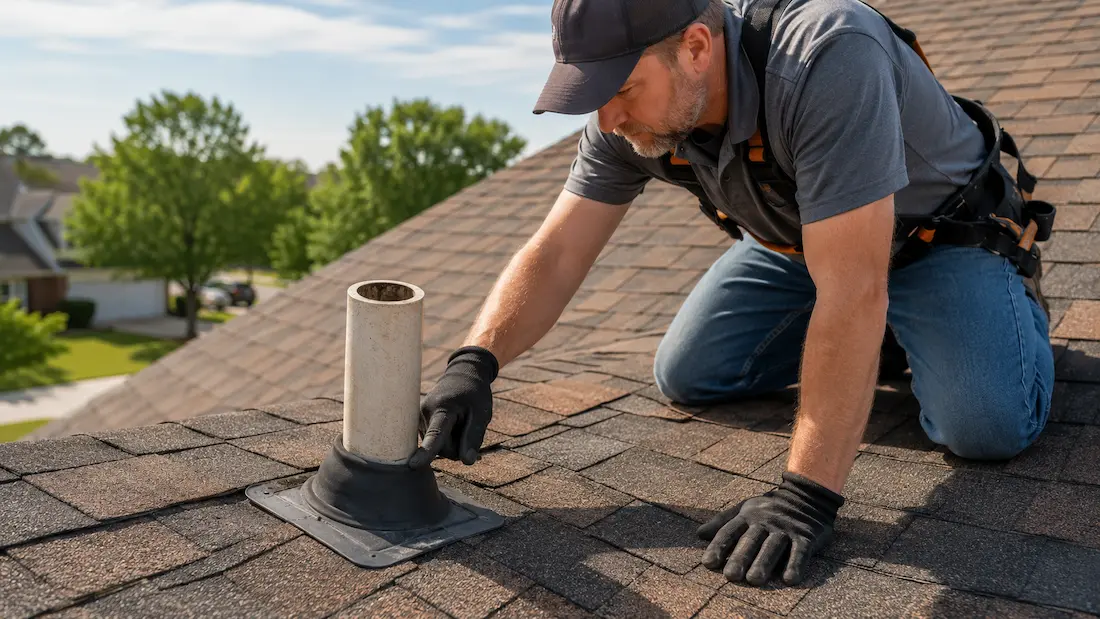
A roof leak around a vent pipe is a common roofing problem that can allow water to enter around a plumbing penetration and travel into the attic, ceiling, or wall before the source is obvious.
The leak may be caused by a cracked rubber pipe boot, deteriorated seal, damaged flashing, lifted shingles, improper installation, or storm-related damage around the vent.
Because water can travel along roof decking and framing before it becomes visible indoors, the stain on your ceiling may not appear directly below the leaking vent pipe.
If you notice water near a plumbing vent, attic staining, or a recurring ceiling leak, the roof penetration should be inspected carefully rather than covered with a quick layer of caulk.
What Is a Roof Vent Pipe?
A roof vent pipe is part of the home’s plumbing ventilation system.
The pipe extends through the roof so the plumbing system can vent properly.
Because the pipe must pass through the roof surface, the opening around it needs to be sealed against water.
This is commonly done with a roof boot or flashing assembly that fits around the pipe and integrates with the surrounding roofing materials.
When that seal or flashing deteriorates, water may begin entering around the penetration.
Why Roof Vent Pipes Are Common Leak Areas
Any penetration through a roof creates a location where roofing materials must be carefully sealed and integrated.
Vent pipes are especially vulnerable because the flashing around them is exposed to:
- Sunlight
- Heat
- Rain
- Wind
- Temperature changes
- Aging
- Roof movement
- Storm conditions
Over time, rubber and other sealing materials may become brittle, cracked, or separated.
If water gets past the vent boot or flashing, it can reach the roof decking and interior of the home.
Common Causes of a Roof Leak Around a Vent Pipe
There are several possible reasons for water leaking around a roof vent.
The exact cause should be confirmed before repairs are made.
1. Cracked Roof Vent Boot
A cracked roof vent boot is one of the most common causes of leaks around plumbing vent pipes.
Many pipe boots use a flexible rubber seal that fits tightly around the pipe.
With age and weather exposure, that rubber can:
- Dry out
- Crack
- Split
- Pull away from the pipe
- Lose flexibility
Once the seal no longer fits tightly, rainwater can enter around the vent pipe.
The damage may be small at first but can worsen over time.
2. Deteriorated Rubber Seal
Even when the entire pipe boot appears intact, the rubber collar around the pipe may begin to deteriorate.
The seal can become brittle from prolonged exposure to heat and sunlight.
Houston-area roofs experience substantial sun and heat exposure, so aging rubber components should be inspected when a vent-related leak is suspected.
A deteriorated seal may allow small amounts of water to enter during rain before the problem becomes obvious indoors.
3. Damaged or Improperly Installed Flashing
Roof vent pipe flashing is designed to direct water around the plumbing penetration and onto the surrounding roofing surface.
If the flashing is damaged or installed incorrectly, water may work beneath it.
Possible problems include:
- Incorrect overlap with shingles
- Loose flashing
- Bent flashing
- Exposed fasteners
- Gaps around the penetration
- Inadequate sealing
- Improper installation during a previous repair
A proper pipe flashing repair should address how the flashing integrates with the roofing system rather than simply sealing the visible gap.
4. Lifted or Damaged Shingles Around the Vent
Sometimes the pipe boot itself is not the only problem.
Shingles surrounding the vent can become:
- Lifted
- Cracked
- Missing
- Loose
- Damaged by wind
- Improperly installed
Water may enter beneath those shingles and travel toward the vent penetration.
A contractor should inspect the surrounding roof area rather than assuming every plumbing vent roof leak comes directly from the rubber boot.
5. Aging Roofing Materials
Roofing components do not age at exactly the same rate.
The main roof may still appear serviceable while pipe boots, sealants, and flashing components begin to deteriorate.
Older roof penetrations are especially worth inspecting when a homeowner notices a new leak near a bathroom, kitchen, or plumbing wall.
Aging alone does not confirm the cause, but it can increase the likelihood that the sealing components around the vent need attention.
6. Storm Damage
Wind and severe weather can affect the roofing materials around vent penetrations.
Possible storm-related problems include:
- Lifted shingles
- Loose flashing
- Impact damage
- Damaged seals
- Movement around the vent boot
A leak that appears after a storm should be inspected for broader roof damage rather than assuming the vent is the only affected area.
How Water Can Travel Before You See the Leak
One reason a roof pipe boot leak can be difficult to diagnose is that water does not always drip straight down.
After entering around a vent, water may travel along:
- Roof decking
- Rafters
- Framing
- Underlayment
- Fasteners
- Pipes
It may eventually appear several feet away from the original entry point.
For example, a ceiling stain near a bathroom wall might originate from a vent pipe higher up the roof rather than directly above the stain.
This is why indoor water damage alone may not accurately identify the roof leak location.
Warning Signs of a Plumbing Vent Roof Leak
A leaking plumbing vent may produce several warning signs.
Water Stains on the Ceiling
Brown or yellow ceiling stains may appear after rainfall.
The stain may grow over time or become darker after repeated water exposure.
Damp Insulation
If the attic is accessible, insulation near the vent or surrounding roof deck may feel damp.
Water Stains on Roof Decking
Dark staining or water marks on the underside of the roof decking can indicate repeated moisture intrusion.
Dripping During Rain
A more active leak may produce visible dripping during heavy or prolonged rainfall.
Musty Odors
Long-term moisture in an attic or wall cavity can sometimes produce musty odors.
Deteriorated Pipe Boot Visible From the Roof
A professional roof inspection may identify cracking or separation around the pipe boot.
Homeowners should avoid climbing onto a roof to investigate if conditions are unsafe.
Why a Leak May Only Appear During Certain Storms
Some roof vent leaks do not occur every time it rains.
The leak may only appear during:
- Wind-driven rain
- Heavy rainfall
- Rain coming from a particular direction
- Long periods of rain
This can happen when water must reach a specific gap in the flashing or boot before it enters the roof system.
Intermittent leaks should still be investigated.
Just because a stain dries between storms does not mean the source has resolved itself.
Is Caulk Enough to Repair a Roof Vent Leak?
Caulk can be useful in certain roofing applications, but applying sealant over a leaking pipe boot is not always a complete repair.
If the rubber boot is cracked, flashing is damaged, or shingles are improperly integrated, surface caulk may only hide the problem temporarily.
Caulk can also:
- Deteriorate with weather exposure
- Separate from aging materials
- Trap moisture
- Make future inspection more difficult
A proper repair should identify why water is entering and correct that problem.
For example, if a vent boot has failed, replacing the damaged component may provide a more appropriate solution than repeatedly adding sealant.
How a Roof Vent Pipe Leak Is Inspected
A roofing professional may examine both the exterior roof and interior areas when accessible.
The inspection may include:
The Pipe Boot
The contractor can look for:
- Cracks
- Splits
- Gaps
- Loose seals
- Deteriorated rubber
Flashing
The flashing can be checked for:
- Damage
- Incorrect overlap
- Loose sections
- Exposed fasteners
- Improper installation
Surrounding Shingles
Shingles near the vent can be inspected for:
- Lifting
- Cracking
- Missing material
- Wind damage
- Previous repairs
Roof Decking
When visible from the attic, the underside of the roof deck may show:
- Water staining
- Moisture
- Deterioration
- Signs of repeated leakage
The goal is to identify the actual path of water before deciding how the repair should be performed.
How Is a Roof Pipe Boot Leak Repaired?
The appropriate repair depends on the condition found.
Possible repairs may include:
- Replacing a failed pipe boot
- Replacing damaged flashing
- Repairing surrounding shingles
- Correcting improper installation
- Replacing deteriorated roofing materials
- Addressing damaged decking if moisture has caused deterioration
The contractor should also verify that the repaired vent integrates correctly with the surrounding roof system.
When Should the Entire Pipe Boot Be Replaced?
Replacement may make sense when the existing pipe boot is:
- Cracked
- Brittle
- Split
- Loose
- Badly deteriorated
- No longer sealing around the pipe
Simply coating severely aged rubber with sealant may not provide a durable repair.
The surrounding roofing materials should also be inspected during replacement.
Can a Vent Leak Damage Roof Decking?
Yes.
If a roof vent leak continues for a long period, water may repeatedly reach the roof sheathing.
Over time, this can contribute to:
- Wood deterioration
- Soft decking
- Staining
- Rot
- Reduced fastener holding strength
The full extent of damage is not always visible until roofing materials are removed.
Addressing the leak early may help reduce the chance that moisture affects a larger area.
Can a Roof Vent Leak Cause Interior Damage?
Yes.
Water entering through a roof penetration can affect several parts of the home.
Possible damage includes:
- Ceiling drywall
- Paint
- Insulation
- Attic materials
- Wood framing
- Roof decking
The severity depends on how long the leak has been active and how much water is entering.
A small visible stain does not always mean the roofing problem itself is small.
Roof Vent Leak vs. Condensation
Not every sign of moisture near a plumbing vent is automatically a roof leak.
In some situations, condensation or other moisture sources may be involved.
That is another reason professional inspection can be useful.
The contractor can evaluate whether water appears to be entering from the exterior roof system or whether another source should be investigated.
Should You Repair the Vent Leak Yourself?
Small roof repairs may look straightforward from the ground, but working around a plumbing vent involves roofing materials, flashing, and water-shedding details.
DIY repairs can also involve roof safety risks.
Improper repairs may:
- Damage shingles
- Trap water
- Cover the actual leak source
- Create additional entry points
- Fail during the next storm
If the leak is recurring or the roof penetration appears damaged, a professional inspection is usually a more reliable approach.
When Is Professional Roof Repair Appropriate?
Consider scheduling a roofing inspection if:
- A ceiling stain appears after rainfall
- Water is visible near a plumbing vent in the attic
- A pipe boot appears cracked or deteriorated
- The leak keeps returning
- Shingles around the vent are damaged
- The problem started after severe weather
- Previous caulk repairs have failed
A roofer can determine whether the problem involves the vent boot, flashing, shingles, roof decking, or another nearby roof component.
What to Do If the Leak Is Active
If water is entering the home during a storm, prioritize interior safety.
You may be able to:
- Move belongings away from the affected area
- Place a container under an active drip when safe
- Avoid electrical fixtures exposed to water
- Document visible interior damage
- Schedule a roof inspection once conditions are safe
Do not climb onto a wet or storm-exposed roof.
Emergency repairs should be performed under safe conditions by someone equipped for roofing work.
Frequently Asked Questions
Common causes include cracked pipe boots, deteriorated rubber seals, damaged flashing, improperly installed flashing, lifted shingles, aging materials, and storm damage.
Caulk may be useful in some situations, but it may not correct a failed boot or damaged flashing. If the underlying component is deteriorated, replacement or a more complete repair may be necessary.
Possible signs include ceiling stains, attic moisture, water marks on roof decking, active dripping during rain, or visible cracking around the pipe boot.
Water can travel along roof decking, framing, underlayment, or other surfaces before dripping into the interior. The visible stain may therefore be located away from the actual entry point.
Yes, especially if the leak appeared after significant wind or severe weather. The surrounding shingles, flashing, and other roof components may also have been affected.
Fix the Source of the Roof Vent Leak, Not Just the Symptom
A roof leak around a vent pipe may begin with something as small as a cracked rubber boot, but water can spread beneath roofing materials and create problems that are not immediately visible.
The most important step is identifying whether the leak comes from the pipe boot, flashing, surrounding shingles, storm damage, or another nearby roof component.
Temporary sealants may hide symptoms without correcting a deteriorated roof penetration.
If you suspect a roof vent or plumbing pipe leak, Rhino-Vations Roofing can inspect the affected area, identify visible roofing problems, and recommend the appropriate repair based on the conditions found.