




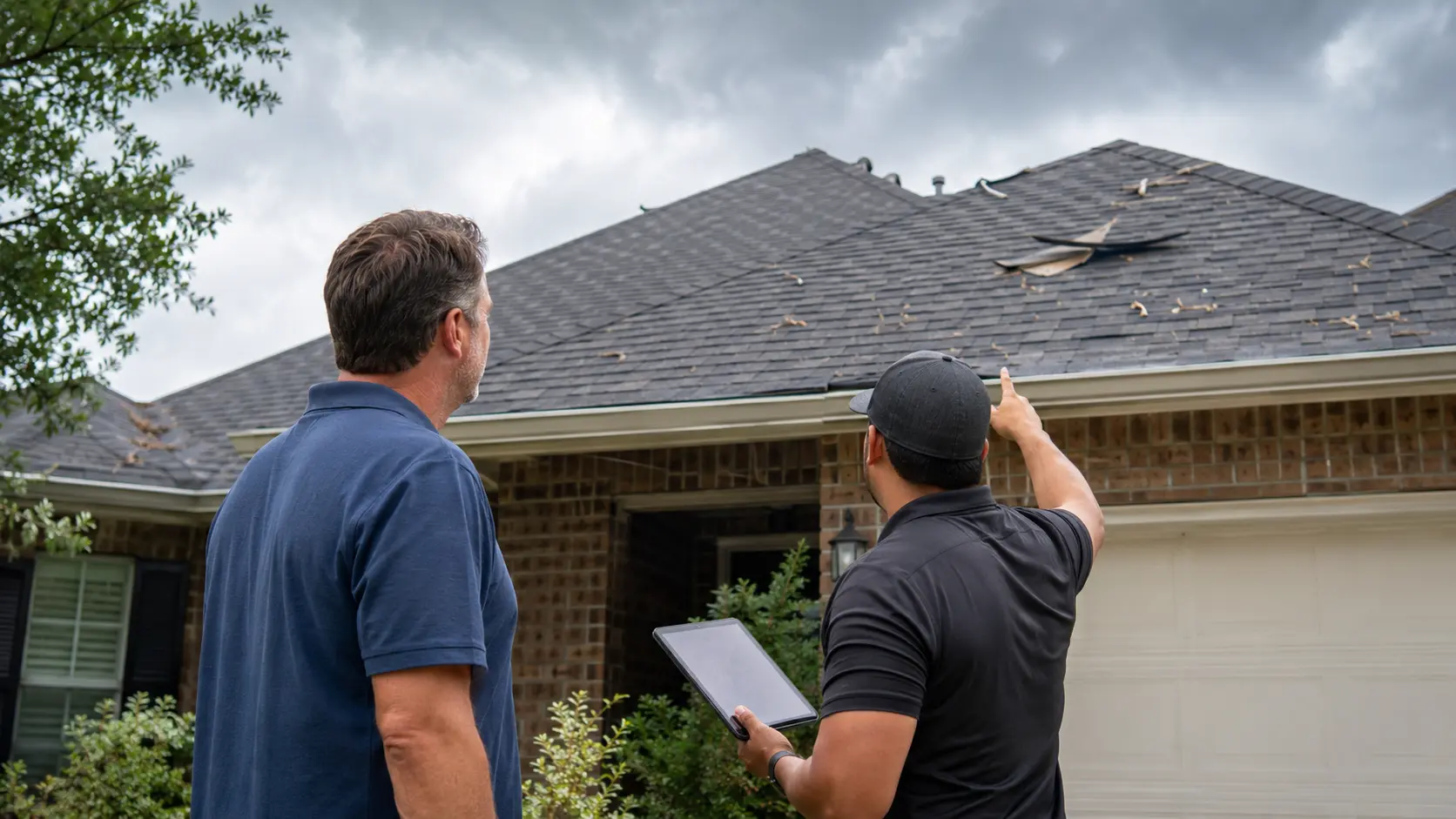
Filing a roof insurance claim after storm damage can feel overwhelming, especially when you are also trying to determine whether your roof needs repairs, emergency protection, or full replacement.
For Texas homeowners, the best approach is to move carefully and document the condition of the property before making unnecessary changes.
A roofing contractor can inspect the roof, document visible damage, and provide repair or replacement estimates when appropriate. However, the contractor is not the insurance adjuster and cannot guarantee that an insurer will approve a claim, pay a specific amount, or authorize a full roof replacement.
Coverage depends on your individual policy, the cause of loss, exclusions, deductible, age or condition of the roof, and the insurer’s evaluation.
1. Prioritize Safety First
After hail, wind, or another severe storm, safety should come before documenting the roof.
Do not climb onto the roof immediately after a storm.
Conditions may include:
- Wet or slippery roofing
- Loose shingles
- Damaged decking
- Fallen branches
- Downed electrical lines
- Unstable roof components
- Debris
From the ground, you may be able to observe obvious damage safely.
If water is actively entering the home, move belongings away from the affected area when possible and avoid electrical fixtures or wiring that have been exposed to water.
If there is significant structural damage, treat the situation as an emergency and avoid unsafe areas until they have been evaluated.
2. Document Visible Storm Damage
Once conditions are safe, document what you can see without climbing onto the roof.
Photographs and videos can help create a record of the property’s condition after the storm.
You may want to document:
- Missing shingles
- Shingles on the ground
- Damaged gutters
- Bent or detached metal components
- Fallen branches
- Damaged siding
- Water stains
- Interior leaks
- Ceiling damage
- Debris around the property
If possible, note the approximate date and time you first noticed the damage.
Avoid removing damaged roofing materials simply for documentation purposes.
A professional inspection can later provide a closer assessment of the roof itself.
3. Avoid Unnecessary Temporary Alterations
Some storm damage may require temporary action to prevent additional water intrusion.
However, homeowners should generally avoid unnecessary permanent repairs before the roof has been inspected and the insurance process is understood.
Temporary measures should focus on protecting the property.
Examples may include:
- Covering an active leak when it can be done safely
- Moving belongings away from water
- Protecting interior surfaces
- Arranging emergency tarping when needed
Keep records of emergency work and related expenses.
Do not attempt unsafe roof repairs yourself during or immediately after severe weather.
4. Review Your Homeowners Insurance Policy
Before assuming the roof damage will be covered, review your insurance policy.
A homeowners insurance roof damage claim may be affected by several factors, including:
- Cause of damage
- Deductible
- Exclusions
- Policy limits
- Roof age
- Roof condition
- Coverage type
- Maintenance issues
- Previous damage
Policies can differ significantly.
Storm-related damage may be treated differently from damage caused by age, deferred maintenance, or long-term deterioration.
If you do not understand a provision in your policy, contact your insurance carrier for clarification.
5. Schedule a Professional Roof Inspection
A roof inspection for insurance claim purposes can help document the physical condition of the roofing system.
A roofing contractor may inspect:
- Shingles
- Flashing
- Roof penetrations
- Valleys
- Ridge areas
- Gutters
- Roof decking when visible
- Storm-related impact areas
- Active leak locations
The contractor can document visible damage and explain what roofing repairs may be necessary.
A roofing contractor’s role is different from the insurer’s adjuster.
The roofer can evaluate the roof from a repair and construction perspective, while the insurance company determines whether the claim is covered under the policy.
6. Document the Inspection Findings
Documentation can be useful when communicating with the insurance carrier.
Depending on the inspection, the roofer may provide:
- Photographs
- Notes about visible roof conditions
- Identification of damaged roofing components
- Repair recommendations
- Replacement recommendations when appropriate
- A roofing estimate
Homeowners should keep copies of all documentation related to the storm.
This may include:
- Photos
- Videos
- Emails
- Contractor estimates
- Receipts
- Claim correspondence
- Temporary repair invoices
Keeping records organized can make it easier to follow the process.
7. Contact Your Insurance Carrier
If you believe the damage may be covered, contact your insurance company and follow the claim reporting instructions in your policy.
The carrier may ask for information such as:
- Date of loss
- Type of storm
- Description of damage
- Photos
- Contractor information
- Interior damage details
Once the claim is opened, the insurer may provide a claim number and explain the next steps.
Keep that information for future communications.
8. Understand the Adjuster Inspection
The insurance company may send an adjuster to inspect the property.
The adjuster evaluates the claim on behalf of the insurance carrier.
The inspection may include:
- Roof condition
- Storm-related damage
- Interior water damage
- Exterior property damage
- Roofing materials
- Scope of potential repairs
The adjuster’s role is different from the roofing contractor’s role.
A roofer may provide construction-related observations and repair estimates, but the insurer determines whether the damage is covered and how the claim will be handled under the policy.
Rhino-Vations Roofing should not be represented as a public adjuster, insurance adjuster, or insurance attorney.
9. Obtain a Roofing Estimate When Appropriate
A roofing estimate can help explain the expected construction scope.
Depending on the damage, the estimate may include:
- Shingle replacement
- Underlayment
- Flashing repairs
- Roof decking replacement
- Vent or pipe boot repairs
- Ridge work
- Gutter repairs
- Removal and disposal
- Labor
A roofing estimate is not an insurance coverage determination.
The insurer may calculate its own scope, pricing, depreciation, deductible, or covered amount based on the policy and claim review.
10. Compare the Insurance Scope With the Roof Condition
After the insurer reviews the claim, homeowners may receive documentation describing the approved scope or claim decision.
Review that information carefully.
If you have questions about coverage, exclusions, deductibles, or claim payments, those questions should be directed to the insurance carrier or another appropriately licensed insurance professional.
A roofing contractor can help explain whether the roofing work described matches the physical repair needs observed during inspection.
11. Understand Repair vs. Replacement
Not every roof storm damage claim results in full replacement.
Some roofs may require localized repairs.
Others may have more extensive damage.
Factors affecting the roofing recommendation can include:
- Location of damage
- Number of affected areas
- Roofing material
- Roof age and condition
- Ability to perform a practical repair
- Decking condition
- Flashing damage
- Extent of storm-related impact
The insurer separately determines whether those repairs or replacement costs are covered under the policy.
A contractor should never promise a homeowner that storm damage automatically qualifies for a full roof replacement.
Hail Damage Roof Insurance Claims
A hail damage roof insurance claim may involve damage that is not obvious from the ground.
Hail can affect:
- Shingles
- Metal flashing
- Roof vents
- Gutters
- Other exterior components
However, not every mark on a roof is necessarily storm damage.
Roof age, wear, manufacturing conditions, previous damage, and normal deterioration can sometimes create similar appearances.
A professional roofing inspection can help identify visible conditions, while the insurer determines what is covered.
Wind Damage and Insurance Claims
High winds can also affect roofing systems.
Potential signs include:
- Missing shingles
- Lifted shingles
- Creased shingles
- Damaged ridge materials
- Loose flashing
- Debris impacts
Wind-driven rain may also enter areas that were previously vulnerable.
If roofing materials are found in the yard after a storm, it may be worth scheduling an inspection even if there is no immediate interior leak.
What If the Roof Is Leaking After the Storm?
If the roof is actively leaking, focus on preventing additional interior damage safely.
You may need emergency roofing assistance if:
- Water is entering rapidly
- Roofing materials are missing
- A large branch has damaged the roof
- Part of the roof is exposed
- Interior damage is increasing
Temporary protection may be appropriate until permanent repairs can be completed.
Keep documentation of emergency work and receipts.
Does Homeowners Insurance Always Cover Storm-Damaged Roofs?
No.
Coverage varies.
A policy may consider:
- The cause of damage
- Policy exclusions
- Deductible
- Condition before the storm
- Age of roofing materials
- Maintenance
- Coverage limits
- Insurer evaluation
The presence of storm damage does not automatically mean the insurer will approve every requested repair.
Likewise, a contractor cannot guarantee the outcome of the claim.
What About Older Roofs?
The age and existing condition of a roof may affect both repair options and insurance handling.
An older roof may already have:
- Granule loss
- Brittle shingles
- Previous repairs
- Aging flashing
- General wear
A professional inspection should distinguish visible storm-related conditions from normal aging as carefully as possible.
The insurer ultimately determines how the policy applies.
Should You Call a Roofer Before the Insurance Company?
There is no single sequence required for every homeowner.
Some homeowners contact a roofing contractor first so they can better understand whether there is visible damage.
Others report the claim immediately and arrange the roofing inspection afterward.
What matters is that you:
- Protect the property
- Document visible damage
- Understand your policy
- Avoid unnecessary alterations
- Follow insurer reporting requirements
- Obtain professional roofing evaluation when appropriate
What Should a Roofing Contractor Do During an Insurance-Related Project?
A roofing contractor may appropriately help with:
- Inspecting roof conditions
- Photographing visible damage
- Explaining roofing repairs
- Preparing repair or replacement estimates
- Performing approved roofing work
- Documenting construction conditions
A roofer should not claim to have authority to determine coverage or promise a specific insurance outcome.
The insurance carrier remains responsible for the claim decision.
Common Mistakes to Avoid After Storm Damage
Waiting Too Long to Inspect Visible Damage
A small roof problem can sometimes allow additional water intrusion during later storms.
Assuming Every Mark Means Insurance-Covered Damage
The presence of wear or damage does not automatically determine coverage.
Signing Based on Guaranteed Insurance Promises
Be cautious of anyone promising guaranteed claim approval, a free roof, or a specific payout before the insurer evaluates the claim.
Making Extensive Repairs Without Documentation
When immediate emergency repairs are not necessary, document existing conditions before significant alterations are made.
Ignoring Interior Damage
Ceiling stains, attic moisture, or new leaks should be documented along with exterior roofing concerns.
Frequently Asked Questions
Prioritize safety, document visible damage, review your policy, and contact your insurance carrier according to its claim reporting process. A professional roofing inspection can also help document roof conditions.
A professional inspection may help you understand whether visible roofing damage exists and what repairs may be needed. The insurance carrier separately determines whether the damage is covered.
No. A roofing contractor can inspect and document roof conditions and provide estimates, but coverage decisions are made by the insurer according to the policy.
No. The appropriate roofing solution depends on the type, extent, and location of damage as well as the overall roof condition. The insurer separately determines what is covered.
A roofing contractor may be present to discuss observed roofing conditions and construction-related issues, but the insurance adjuster evaluates the claim for the carrier. The contractor does not control the insurance decision.
Take a Careful, Documented Approach After Storm Damage
A roof insurance claim after storm damage should begin with safety, documentation, and a clear understanding of the roof’s condition.
Texas homeowners should document visible damage, review their insurance policy, arrange a professional roof inspection when appropriate, keep records, and communicate directly with their insurance carrier throughout the claim.
Coverage and claim outcomes vary depending on the policy, deductible, exclusions, cause of damage, roof condition, and insurer evaluation.
If your Houston-area home has been affected by hail, wind, or another storm, Rhino-Vations Roofing can inspect the roof, document visible roofing conditions, and provide repair or replacement recommendations based on what is found.