




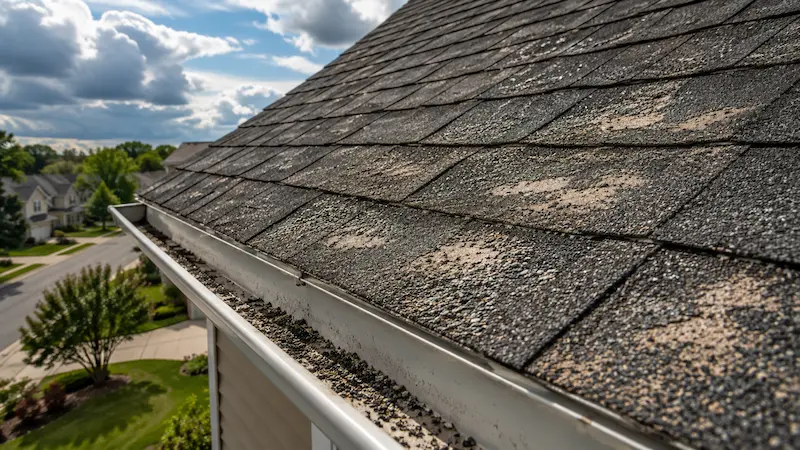
Noticing granule loss on shingles can be unsettling, especially when you find gritty particles in your gutters, around your downspouts, or near the edges of your home after a storm. The good news is that not all roof granule loss means your roof is failing. The bad news is that sometimes it can be an early warning sign of aging shingles, storm damage, hail impact, or a roof that is getting closer to replacement.
At Rhinovations, we work with homeowners across the Houston and Katy area, where roofs deal with intense sun, humidity, heavy rain, wind, and storm activity. In our experience as a local roofing company, granule loss should never be judged by one sign alone. A few loose granules may be normal. Large amounts of missing granules, bald spots, exposed asphalt, or granule loss after hail may point to a bigger roofing issue.
In this guide, we’ll explain what shingle granule loss means, when it is normal, when homeowners should worry, and what to do next if you see granules in your gutters.
What Is Granule Loss on Shingles?
Granule loss on shingles happens when the small mineral particles on the surface of asphalt shingles loosen and fall off. These granules are the rough, sand-like coating you see on the top layer of most asphalt roofing shingles.
They are not just there for appearance. Roof granules play an important role in protecting your shingles from weather, UV rays, and everyday wear.
What Roof Granules Do for Asphalt Shingles
Asphalt shingles are built in layers. The visible outer layer is covered with mineral granules that help protect the asphalt underneath. These granules help:
- Shield shingles from UV exposure
- Add fire resistance
- Improve durability
- Help shingles shed water properly
- Give shingles their color and texture
- Reduce direct heat damage to the asphalt layer
Without granules, shingles become more vulnerable to sunlight, heat, rain, and impact damage. That is why missing granules should be taken seriously when they appear in large areas or unusual patterns.
Why Missing Granules Can Expose Your Roof to Damage
When enough granules are missing, the asphalt layer underneath can become exposed. Once asphalt is exposed to direct sunlight and weather, it may dry out, crack, blister, or deteriorate faster.
This does not always mean your roof will leak immediately, but it can shorten the life of the roofing system. Over time, severe asphalt shingle granule loss can lead to brittle shingles, reduced water protection, and a higher risk of roof leaks.
For Houston-area homeowners, this matters even more because Texas heat and storm activity can speed up roof wear. A roof that might look “mostly fine” from the ground can still have areas where granule loss is weakening the shingle surface.
Is Granule Loss on Shingles Normal?
Yes, some granule loss is normal. The key is understanding how much is normal, when it happens, and what patterns you are seeing.
Not every pile of granules in the gutter means you need a new roof. Asphalt shingles commonly release some excess granules during manufacturing, shipping, installation, and early weather exposure. However, ongoing or heavy roof granule loss can be a sign that your roof needs professional attention.
Normal Granule Shedding on a Newer Roof
A new roof may shed some loose granules after installation. This is usually caused by extra granules that were added during manufacturing and did not fully embed into the asphalt surface.
You may notice small amounts of granules:
- After the first few rains
- Near downspouts
- In gutters
- Around the base of your home
- Shortly after a new roof installation
In many cases, this early shedding slows down naturally. If the shingles look intact and there are no bald patches, cracking, exposed asphalt, or loose shingles, it may simply be normal new-roof granule shedding.
That said, if a newly installed roof is losing large amounts of granules or showing visible bare spots, it is worth scheduling an inspection. Excessive granule loss on a newer roof may point to defective shingles, rough handling, poor installation, or storm damage shortly after installation.
Normal Aging vs. Premature Granule Loss
As roofs age, granule loss becomes more common. Over the years, sun exposure, rain, wind, temperature changes, and debris can gradually loosen the protective granule layer.
Normal aging usually appears as consistent, gradual wear across the roof. Premature granule loss is different. It may show up as:
- Heavy granules in gutters
- Bald spots on shingles
- Dark patches where asphalt is exposed
- Uneven wear on one roof slope
- Sudden granule loss after hail or wind
- Shingles that look shiny, thin, or brittle
At Rhinovations, we always recommend looking at granule loss in context. Roof age, recent storms, shingle condition, attic ventilation, and previous repairs all matter. Granules alone tell part of the story, but a full roof inspection gives a clearer answer.
Common Causes of Granule Loss on Roof Shingles
There are several reasons homeowners may notice shingle granules coming loose. Some causes are normal. Others may indicate damage or premature roof failure.
Understanding the cause helps determine whether you should monitor the roof, request a repair, document storm damage, or start thinking about roof replacement.
Age and Everyday Weathering
Age is one of the most common causes of granule loss on roof shingles. As asphalt shingles get older, they naturally lose some flexibility and surface protection.
Over time, everyday exposure to the elements wears down the granule coating. Rainwater running across the roof, sun exposure, wind, tree debris, and temperature changes can all contribute to gradual roof granule loss.
Older shingles may also start to curl, crack, blister, or lose adhesion. When these symptoms appear together with granule loss, the roof may be approaching the end of its service life.
Houston Heat, Humidity, and Sun Exposure
In Houston and Katy, roofing materials deal with long periods of heat, strong sun, and high humidity. These conditions can be hard on asphalt shingles.
UV rays can dry out asphalt. Heat can accelerate aging. Humidity can contribute to moisture-related roofing concerns when ventilation or drainage is poor. Over time, these factors may weaken the bond between the asphalt and the granules.
That is why local roof inspections matter. A roof in Texas does not age the same way as a roof in a cooler, milder climate. Our team at Rhinovations looks at how the entire roofing system is holding up under local weather conditions, not just whether there are granules in the gutter.
Heavy Rain, Wind, and Storm Runoff
Heavy rain can wash loose granules off the roof and into the gutters. Sometimes the rain is not the original cause of the granule loss; it simply reveals granules that were already loose due to age, heat, or impact damage.
Wind can also lift shingles, loosen edges, or expose vulnerable areas. If wind-driven rain gets under damaged shingles, it can increase the risk of leaks.
After a strong Houston storm, it is common for homeowners to notice more granules near downspouts. A small amount may not be alarming, but a sudden increase after severe weather should be checked.
Hail Impact and Storm Damage
Hail can cause serious granule loss on shingles. When hailstones hit the roof, they can knock granules loose and bruise the shingle surface. In some cases, hail impact leaves circular marks, exposed asphalt, soft spots, or damaged areas that are not easy to see from the ground.
This is one of the most important reasons not to ignore granule loss after a storm. Hail damage is not always obvious, but it can reduce the life of your shingles and create future leak risks.
If you notice granules in gutters after hail, take photos, write down the date of the storm, and schedule a professional roof inspection. Rhinovations can help homeowners determine whether the granule loss appears storm-related and whether additional documentation may be needed.
Foot Traffic or Improper Roof Access
Walking on shingles can loosen granules, especially when the roof is hot, old, steep, or already worn. Contractors, satellite installers, pressure washers, painters, or even homeowners trying to inspect the roof may accidentally damage the shingle surface.
This is why we do not recommend climbing onto your roof to check granule loss yourself. You can usually spot many warning signs safely from the ground with binoculars or by checking gutters and downspouts.
Professional roofers know where to step, what to avoid, and how to inspect shingles without causing unnecessary damage.
Manufacturing or Installation Issues
Although less common, manufacturing defects or installation problems can contribute to premature granule loss. Shingles may lose granules faster if they were poorly manufactured, mishandled, improperly stored, or installed incorrectly.
Installation-related issues may include poor nail placement, excessive scuffing, incorrect fastening, poor ventilation, or shingles installed under unsuitable conditions.
If a roof is relatively new and already showing bald spots, uneven granule loss, or excessive shedding, it should be inspected to determine whether the problem is normal settling, storm damage, product-related, or installation-related.
How to Tell If Granule Loss Is Serious
The seriousness of granule loss depends on amount, pattern, timing, and the overall condition of the roof.
A few granules in the gutter after rain may be normal. Heavy accumulation, exposed asphalt, or sudden loss after hail may be a warning sign.
Granules Collecting in Gutters or Downspouts
One of the most common signs of roof granule loss is finding gritty material in your gutters or near downspouts. These granules may look like coarse sand, small pebbles, or dark mineral particles.
You should pay attention if:
- Gutters are filling with granules repeatedly
- Downspouts are washing out piles of granules
- Granules appear after every storm
- You notice more granules than usual
- The roof is older or already showing wear
Granules in gutters do not automatically mean roof replacement is needed. But they do mean the roof deserves a closer look, especially if the issue is new or worsening.
Bald Spots, Dark Patches, or Exposed Asphalt
Visible bald spots are more concerning than loose granules alone. Bald spots mean the protective granule layer has worn away in specific areas.
From the ground, these may look like:
- Dark patches
- Shiny areas
- Smooth spots
- Discolored shingles
- Thin or uneven sections
- Exposed black asphalt
When asphalt is exposed, the shingle is more vulnerable to UV damage and water-related deterioration. If multiple areas of the roof show bald patches, the roof may be significantly worn or damaged.
Uneven Wear on One Slope of the Roof
Sometimes granule loss appears more heavily on one side of the roof. This may happen because one slope gets more direct sunlight, wind exposure, storm impact, or water runoff.
For example, a slope that faces intense afternoon sun may age faster. A slope exposed to wind-driven rain may show different wear than a more protected area. Valleys and drainage paths can also lose granules faster because water flows through them more often.
Uneven granule loss is worth inspecting because it may reveal localized damage, ventilation issues, storm impact, or an aging section of the roof.
Granule Loss After a Storm
Sudden granule loss after a storm is one of the clearest reasons to schedule a roof inspection. Heavy rain, wind, and hail can all contribute to roof damage.
After a storm, check safely from the ground for:
- Granules around downspouts
- Missing shingles
- Lifted shingles
- Dented gutters
- Damaged vents
- Debris on the roof
- Water stains inside the home
- New leaks or ceiling spots
Do not assume the roof is fine just because there is no active leak. Many storm-related roofing issues start small and become more expensive if ignored.
Can Storms or Hail Cause Granule Loss?
Yes. Storms and hail can absolutely cause granule loss on shingles. In fact, storm damage is one of the main reasons homeowners call a roofer after noticing granules in gutters.
In the Houston area, roofs are regularly exposed to heavy rain, high winds, hail events, and sudden severe weather. These conditions can loosen granules, damage shingles, and expose weak points in the roofing system.
How Hail Knocks Granules Loose
When hail hits asphalt shingles, the impact can dislodge granules from the surface. Depending on the size, speed, and density of the hail, it may also bruise or fracture the shingle mat underneath.
Hail damage may show up as:
- Round impact marks
- Missing granules in circular areas
- Exposed asphalt
- Soft bruised spots
- Cracked shingles
- Dented metal vents or gutters
- Water stains inside the home
- New leaks or ceiling spots
Not all hail damage is visible from the ground. That is why a professional roof inspection is important after a significant hailstorm.
Why Heavy Rain Can Reveal Existing Roof Wear
Heavy rain often reveals roof problems that were already developing. If shingles are old, brittle, or weakened by sun exposure, rainwater may wash away loose granules and make the issue more noticeable.
This is why homeowners sometimes say, “I never saw granules before that storm.” The storm may have caused new damage, or it may have exposed an aging roof that was already losing protection.
Either way, the next step is the same: document what you see and have the roof inspected.
When Storm Damage May Need Documentation
If granule loss appears after hail, wind, or heavy rain, documentation matters. Take photos of granules, gutters, downspouts, roof slopes, damaged vents, and any interior water stains.
At Rhinovations, we help homeowners understand what type of roof damage they may be dealing with and whether the issue appears related to age, normal wear, or storm damage. If insurance is involved, clear documentation and a professional inspection can make the process easier to understand.
Does Granule Loss Mean You Need a Roof Replacement?
Granule loss does not always mean you need a new roof. In some cases, the roof may only need monitoring, maintenance, or a small repair. In other cases, widespread granule loss can be a sign that roof replacement is the smarter long-term option.
The decision depends on roof age, severity of granule loss, shingle condition, leak history, storm exposure, and how much useful life is left in the roofing system.
When a Repair May Be Enough
A roof repair may be enough if granule loss is limited to a small area and the rest of the roof is in good condition.
For example, repair may be possible when:
- A few shingles were damaged by debris
- A small area has storm impact
- Granule loss is localized
- There are no widespread bald spots
- The roof is not near the end of its lifespan
- There are no major leaks or structural concerns
A professional roofer can check whether individual shingles can be replaced or whether the issue is part of a larger roof-wide problem.
When Granule Loss Points to an Aging Roof
Granule loss may point to an aging roof when it appears across large areas or is combined with other signs of deterioration.
Watch for:
- Widespread bald spots
- Curling shingles
- Brittle shingles
- Frequent leaks
- Missing shingles
- Sagging areas
- Heavy granules in gutters
- Dark streaks or exposed asphalt
- Roof age of 15–20+ years, depending on material and conditions
In this situation, repeated repairs may become less cost-effective. A roof replacement may provide better protection and peace of mind.
Why an Inspection Matters Before Deciding
It is hard to judge roof granule loss accurately from the ground. A roof may look acceptable from a distance but have hidden damage. On the other hand, a few granules in a gutter may look alarming but turn out to be normal shedding.
That is why Rhinovations recommends a professional roof inspection before making any major decision. Our goal is to help homeowners understand what is actually happening, whether the roof needs repair, replacement, storm damage documentation, or simple monitoring.
What Homeowners Should Do If They Notice Granules in Gutters
If you notice granules in your gutters, do not panic. Start with a safe, simple check and gather information before assuming the worst.
The goal is to understand whether this is normal, storm-related, or a sign of roof aging.
Check Safely from the Ground
You can do a basic roof check without climbing onto the roof.
Look for:
- Granules near downspouts
- Piles of gritty material in gutters
- Dark or shiny patches on shingles
- Missing shingles
- Lifted or curled shingles
- Damaged flashing
- Dented gutters or vents
- Water stains on ceilings or walls
Use binoculars if needed. Avoid walking on the roof, especially after rain, during high heat, or if shingles look worn.
Take Photos After Storms
Photos can help track changes over time. They are also useful if you need a roofer to evaluate possible storm damage.
Take photos of:
- Granules in gutters
- Granules near downspouts
- Any visible roof damage
- Dented gutters or metal components
- Missing or lifted shingles
- Interior water stains
- Date and time after the storm
Even if you are not sure whether the damage is serious, documentation gives you a better starting point.
Avoid Walking on the Roof
Walking on the roof can be dangerous and may make granule loss worse. Shingles can be slippery, fragile, or easily damaged by foot traffic.
Instead of climbing up yourself, schedule a roofing inspection. A trained roofing professional can inspect the roof safely and identify issues that are easy to miss from the ground.
Schedule a Professional Roof Inspection
A professional inspection can help answer the most important questions:
- Is the granule loss normal?
- Is the roof aging prematurely?
- Is there hail or storm damage?
- Are there exposed areas of asphalt?
- Is there a leak risk?
- Does the roof need repair or replacement?
- Should the damage be documented for insurance?
Rhinovations offers roof inspections for homeowners in Houston, Katy, and surrounding areas. We inspect the roofing system carefully and explain what we find in plain language so you can make a confident decision.
When to Schedule a Professional Roof Inspection in Houston
For Houston-area homeowners, roof inspections are especially important because local weather can be tough on shingles. Heat, humidity, heavy rain, wind, and hail can all affect how quickly a roof wears down.
You should schedule an inspection if granule loss is new, heavy, uneven, or connected to storm activity.
After Hail, Wind, or Heavy Rain
If you notice granules after a storm, it is worth having the roof checked. Storm damage is not always obvious, and leaks may not appear right away.
Schedule an inspection after:
- Hailstorms
- High winds
- Heavy rain
- Flying debris
- Fallen branches
- Sudden gutter granule buildup
- New water stains or leaks
A timely inspection can help catch small issues before they turn into larger roof problems.
If Your Roof Is 10+ Years Old
A roof that is 10 years old or older may still have plenty of life left, but it should be watched more carefully. Granule loss becomes more important as shingles age.
If your roof is older and you are seeing granules in the gutters, bald spots, curling, cracking, or leaks, an inspection can help estimate remaining roof life and identify whether repairs are still practical.
If You See Leaks, Stains, or Missing Shingles
Granule loss becomes more urgent when it appears along with signs of water intrusion or physical roof damage.
Call a roofer if you notice:
- Ceiling stains
- Wall stains
- Dripping water
- Musty attic smells
- Missing shingles
- Lifted shingles
- Damaged flashing
- Soft roof decking
- Repeated gutter granule buildup
These signs may mean your roof is no longer protecting the home properly.
How Rhinovations Can Help
At Rhinovations, we help homeowners with roof inspections, roof repairs, storm damage repair, roof leak repair, roof maintenance, and roof replacement. We understand how Houston weather affects roofing systems, and we do not believe in pushing homeowners toward replacement when a repair is enough.
If your shingles are losing granules, our team can inspect the roof, explain the cause, and recommend the next best step. Whether the issue is normal aging, hail damage, wind damage, or a roof near the end of its lifespan, we’ll help you understand your options clearly.
Final Thoughts: Don’t Ignore Granule Loss on Shingles
Granule loss on shingles is not always an emergency, but it should not be ignored. A small amount of shedding can be normal, especially on a newer roof or after routine weather exposure. However, heavy granule loss, bald spots, exposed asphalt, storm-related shedding, or repeated granules in gutters can point to roof damage or aging shingles.
The safest approach is simple: check from the ground, take photos, avoid walking on the roof, and schedule a professional inspection if anything looks unusual.
For homeowners in Houston, Katy, and nearby areas, Rhinovations can help determine whether your granule loss is normal, repairable, storm-related, or a sign that your roof may need replacement.
Noticing granules in your gutters or around your downspouts? Contact Rhinovations today to schedule a professional roof inspection and get clear answers before the problem gets worse.
FAQs About Granule Loss on Shingles
Granule loss is not always bad. A small amount can be normal, especially after a new roof installation or after heavy rain. However, heavy or repeated granule loss may indicate aging shingles, hail damage, storm damage, or exposed asphalt that needs professional inspection.
Granule loss may be too much if gutters are repeatedly filling with granules, if you see piles near downspouts, or if shingles have bald spots, dark patches, or exposed asphalt. The amount matters, but the pattern and roof condition matter too.
Granule loss itself may not cause an immediate leak, but it can make shingles more vulnerable. Once the protective granule layer is gone, the asphalt underneath can deteriorate faster, increasing the risk of cracks, water intrusion, and future roof leaks.
Yes, some granules in gutters can be normal after a new roof installation. New shingles often shed loose excess granules at first. If shedding is heavy, continues for a long time, or comes with visible bald spots, schedule an inspection.
Yes. Hail can knock granules loose and bruise the shingle surface. Hail-related granule loss may appear as circular impact marks, exposed asphalt, or damaged areas that are hard to see from the ground. A roof inspection is recommended after a hailstorm.
Not always. Minor or localized granule loss may only require monitoring or repair. Widespread granule loss, exposed asphalt, aging shingles, repeated leaks, or severe storm damage may mean roof replacement is a better option.
Yes, especially if the granule loss is heavy, sudden, storm-related, or happening on an older roof. A professional roofer can determine whether the issue is normal wear, storm damage, or a sign your roof needs repair or replacement.