



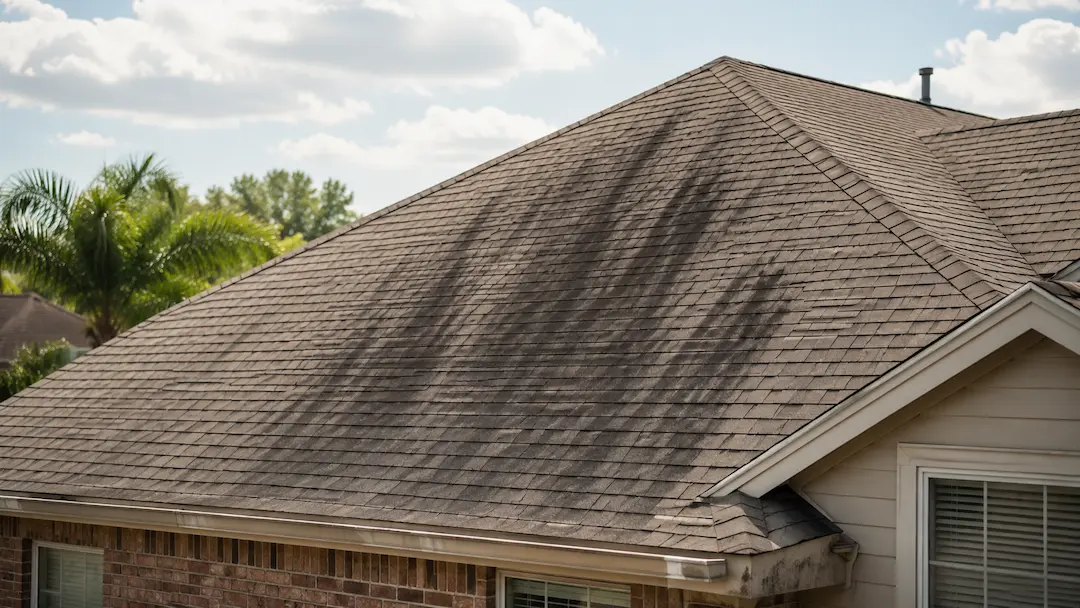
Black streaks on roof shingles are one of those things many homeowners notice and immediately wonder, “Is my roof dirty, damaged, or starting to fail?” The good news is that those dark stains are usually not a sign that your roof is about to collapse. In most cases, black streaks on roof shingles are caused by algae, especially a type commonly known as Gloeocapsa magma.
That said, they are still worth taking seriously.
In Houston, Katy, and across Southeast Texas, roofs deal with a tough mix of heat, humidity, heavy rain, shade, wind, and storm activity. That climate can make roof algae more common, but it can also hide other issues like granule loss, aging shingles, flashing problems, roof leaks, or storm damage. At Rhinovations, we look at roof stains in the context of Houston’s weather, not as an isolated cosmetic problem.
So, are black streaks bad? Should you clean them? Can you pressure wash them? And how do you know when it is time to repair or replace your roof?
Let’s break it down.
What Are the Black Streaks on Roof Shingles?
Black streaks on roof shingles are usually dark stains caused by algae growth. They often appear as long vertical streaks running down the roof, especially on shaded areas or roof slopes that do not get much direct sunlight.
Many homeowners assume the marks are dirt, soot, mold, or pollution. Sometimes roof stains can be related to debris or environmental buildup, but the classic black streak pattern on asphalt shingles is commonly linked to roof algae.
Why those dark stains are usually not just dirt
Dirt tends to look uneven, dusty, or patchy. Black algae streaks usually look more like dark trails that move downward with rainwater. They may start small and gradually spread over time.
You may notice them more on:
- North-facing roof slopes
- Shaded sections under trees
- Areas with poor drainage
- Roofs surrounded by heavy vegetation
- Older asphalt shingles
- Homes in humid climates like Houston
The reason these stains become so visible is that the algae develops a dark outer coating. That coating helps protect it from sunlight, which is why it often appears black or dark brown from the ground.
The role of roof algae and Gloeocapsa magma
The most common cause of black streaks on roof shingles is Gloeocapsa magma, a type of blue-green algae. It spreads through airborne spores and can land on nearby roofs, especially in neighborhoods where many homes have asphalt shingles.
Once it finds the right conditions, it can grow and spread. Houston’s humidity makes that easier. Add shade, moisture, tree coverage, clogged gutters, and warm temperatures, and you have the perfect setup for algae stains.
Why asphalt shingles are especially vulnerable
Asphalt shingles often contain limestone filler. Roof algae can feed on that limestone component, which helps it survive and grow. This does not mean every stained roof is ruined, but it does mean black streaks should not be ignored forever.
At Rhinovations, when we inspect a stained roof, we do not only look at the color of the shingles. We also check the condition of the shingles, roof valleys, flashing, ventilation, gutters, and signs of possible storm-related wear.
What Causes Black Streaks on Roof Shingles?
The short answer: moisture, shade, algae spores, and asphalt shingles create the conditions for black roof streaks.
The longer answer is that roof algae does not appear randomly. It needs the right environment, and Houston gives it plenty of opportunities.
Humidity, shade, and Houston’s climate
Houston’s climate is one of the biggest reasons roof stains are common here. Warm temperatures and high humidity allow algae, moss, mildew, and other organic growth to develop more easily on exterior surfaces.
A roof that stays damp for long periods is more likely to develop black streaks. This can happen after rain, in shaded areas, or in spots where airflow is poor.
Because Rhinovations works with residential roofing systems across Houston and Katy, we know how quickly heat, humidity, rain, and shade can affect shingles. A stain that looks minor from the street may still deserve a closer look, especially if the roof is older or has been through recent storms.
North-facing roof slopes and tree coverage
Black streaks often show up first on roof sections that receive less sunlight. In many cases, that means the north-facing side of the roof. Without enough sun exposure, moisture dries more slowly, giving algae more time to grow.
Tree coverage can make the issue worse. Branches create shade, leaves trap moisture, and organic debris can collect in roof valleys and gutters. If branches touch or hang too close to the roof, they may also scrape shingles or drop debris that holds moisture.
Limestone filler in shingles and algae growth
Asphalt shingles are popular because they are practical, affordable, and effective. But some shingles contain materials that algae can use as a food source, especially limestone filler.
That is why black streaks are not just a surface-level dirt issue. The algae may continue spreading if the roof remains humid, shaded, and unmaintained.
Poor drainage, clogged gutters, and roof debris
Clogged gutters can cause water to back up or drain poorly. Roof valleys full of leaves can hold moisture. Debris sitting on shingles can create small damp zones where algae and other growth can develop.
This is why roof maintenance matters. Keeping gutters clear, trimming trees, and removing debris can help reduce the conditions that allow black algae to thrive.
Are Black Streaks on Roof Shingles Bad?
Black streaks on roof shingles are not always an emergency. In many cases, they are mostly cosmetic at first. However, they can still affect curb appeal, reduce the clean look of your home, and potentially contribute to moisture-related wear if ignored for too long.
The key is knowing when the stain is just algae and when it may be hiding a bigger roofing problem.
When black streaks are mostly cosmetic
If your shingles are fairly new, lying flat, not missing granules, and there are no leaks or soft spots, the black streaks may be mainly cosmetic. In that case, safe cleaning and prevention may be enough.
A stained roof does not automatically mean you need roof replacement. In fact, one of the biggest mistakes homeowners make is assuming that every ugly roof is a failing roof.
A professional roof inspection can help you avoid overreacting. Sometimes the right answer is simple maintenance.
When stains may point to deeper roof problems
The concern starts when black streaks appear alongside other signs of roof wear. Algae itself may not be the only issue. The staining can make it harder to notice shingle damage, granule loss, or storm-related problems.
You should pay closer attention if you also see:
- Curling shingles
- Cracked shingles
- Missing shingles
- Bald spots or granule loss
- Loose flashing
- Water stains inside the home
- Sagging areas
- Moss or heavy organic growth
- Recent hail or wind damage
In many cases, a stained roof does not need replacement. But when discoloration appears together with curling shingles, missing granules, or leaks, it is time to take the issue seriously.
Signs to watch for: granule loss, curling shingles, leaks, and storm damage
Granules protect asphalt shingles from sunlight and weather. If black streaks are combined with visible granule loss, the shingles may be aging or deteriorating.
Curling shingles can allow wind-driven rain to get underneath the roofing surface. Leaks may point to flashing problems, damaged shingles, or roof deck issues. Storm damage can also be hard to see from the ground, especially after hail or strong winds.
That is why Rhinovations does not treat black streaks as a one-size-fits-all issue. Our goal is to give homeowners a clear answer: clean it, maintain it, repair it, or replace it only when it truly makes sense.
Roof Algae vs. Mold, Moss, Dirt, and Roof Damage
Not every roof stain is the same. Before cleaning or repairing anything, it helps to understand what you are looking at.
| Roof issue | What it may look like | Common cause | What to do |
| Roof algae | Black or dark brown streaks running downward | Humidity, shade, airborne algae spores | Safe cleaning and prevention |
| Mold or mildew | Dark patches, often in damp areas | Moisture and poor airflow | Inspection and moisture control |
| Moss | Green, raised, fuzzy growth | Shade, moisture, organic debris | Remove carefully; avoid damaging shingles |
| Dirt or debris | Uneven discoloration or buildup | Leaves, dust, branches, pollution | Clear debris and maintain gutters |
| Shingle damage | Bald spots, curling, cracking, missing pieces | Age, storms, UV exposure, impact | Roof repair or replacement evaluation |
How to tell the difference visually
Algae usually appears as flat, dark streaks. Moss is thicker and raised. Dirt is often more random. Shingle damage may show as missing granules, exposed asphalt, cracks, or irregular texture.
From the ground, it can be difficult to tell the difference. That is especially true if the roof is steep, older, or partially shaded.
Why the wrong diagnosis can lead to the wrong repair
If you think algae is dirt, you may try to scrub it aggressively. If you think moss is harmless, you may leave it until it lifts shingles. If you think roof damage is only staining, you may delay a needed repair.
The wrong solution can cost more in the long run.
For example, pressure washing may make a roof look cleaner temporarily, but it can strip protective granules from asphalt shingles. That can shorten the life of the roof and create bigger problems later.
When a professional roof inspection makes sense
A roof inspection makes sense when:
- The stains are spreading quickly
- The roof is older
- You see missing or curling shingles
- You notice granules in the gutters
- There are leaks or ceiling stains
- The home recently experienced hail, wind, or heavy storms
- You are not sure whether the stains are algae or damage
For homeowners in Houston and Katy, Rhinovations offers roof inspections designed to look beyond surface stains and evaluate the full roofing system.
Can You Remove Black Streaks from Roof Shingles?
Yes, black streaks can often be removed or lightened, especially if they are caused by algae. The safest method depends on the roof condition, shingle type, slope, age, and severity of staining.
The most important rule is this: do not pressure wash asphalt shingles.
Safe roof cleaning methods
Many roof cleaning approaches use a low-pressure application of a cleaning solution designed to kill algae and lift stains over time. This is often called soft washing.
Soft washing is different from pressure washing. The goal is to treat the algae without blasting the shingles.
A safe roof cleaning process may include:
- Inspecting the roof first
- Protecting landscaping
- Applying the correct cleaning solution
- Using low pressure
- Allowing the treatment to work
- Rinsing carefully when appropriate
- Checking the roof condition afterward
Not every roof should be cleaned the same way. Older or damaged shingles may not be good candidates for aggressive cleaning.
Why pressure washing asphalt shingles is a bad idea
Pressure washing can remove the protective granules from asphalt shingles. Those granules help protect the roof from UV exposure and weather. Once they are gone, the shingle may age faster.
Pressure washing can also force water under shingles, damage flashing, and create leak risks.
Even if the roof looks cleaner afterward, the damage may not be obvious right away. That is why most roofing professionals recommend avoiding high-pressure washing on asphalt shingles.
DIY cleaning risks homeowners should know
Some homeowners try to clean black streaks themselves. While that may seem simple, there are real risks.
Walking on a roof can be dangerous. Using the wrong chemical mix can damage shingles, landscaping, siding, or gutters. Applying too much pressure can harm the roof. And cleaning stains without checking the roof condition first may hide problems that need repair.
DIY cleaning is especially risky if:
- The roof is steep
- The shingles are old
- There is moss or heavy growth
- There has been recent storm damage
- You do not have proper safety equipment
- You are unsure which product to use
When to call a professional instead of cleaning it yourself
Call a professional if the black streaks are widespread, the roof is older, you see signs of damage, or you are not comfortable safely accessing the roof.
At Rhinovations, our team checks for more than black streaks. We look at shingles, flashing, ventilation, roof valleys, gutters, leaks, and storm damage so you know whether cleaning is enough or whether repairs are needed.
How to Prevent Black Streaks from Coming Back
Cleaning black streaks is only part of the solution. If the conditions that caused the algae remain, the streaks can return.
Prevention is about reducing moisture, improving airflow, limiting debris, and choosing better materials when it is time for replacement.
Keep gutters and roof valleys clear
Clogged gutters and debris-filled valleys can trap water. That moisture creates better conditions for algae, moss, and mildew.
Regular gutter cleaning helps water move off the roof properly. It also reduces the risk of water backing up under shingles or overflowing near fascia and soffits.
Trim back trees and reduce shaded moisture
Trees provide shade, but too much shade can keep shingles damp. Overhanging branches can also drop leaves, twigs, and organic debris onto the roof.
Trimming branches back from the roof can help sunlight reach the shingles and allow the surface to dry faster after rain.
You do not need to remove every tree around your home. The goal is to reduce constant shade and debris buildup.
Improve attic ventilation and airflow
Ventilation affects how your roof system handles heat and moisture. Poor attic ventilation can contribute to roofing problems, especially in hot and humid climates.
Good airflow helps regulate attic temperature and moisture levels. That can support overall roof performance and help reduce conditions that contribute to staining and premature shingle wear.
Consider zinc or copper strips
Zinc or copper strips can help reduce algae growth. When rainwater runs over the metal, small particles wash down the roof and make it harder for algae to grow.
These strips are often installed near the roof ridge. They are not a magic fix for every roof, but they can be part of a prevention plan.
Choose algae-resistant shingles when replacing your roof
If your roof is near the end of its life, algae-resistant shingles may be worth considering. These shingles are designed with materials that help resist algae staining.
For Houston homeowners, algae-resistant shingles can be a smart upgrade, especially if your home has shade, trees, poor sun exposure, or a history of roof staining.
When Rhinovations helps homeowners evaluate roof replacement options, we consider the local climate, roof design, ventilation, storm exposure, and long-term maintenance needs.
Should You Clean, Repair, or Replace a Roof with Black Streaks?
The right answer depends on the condition of the roof.
Black streaks alone do not automatically mean replacement. But stains combined with shingle wear, leaks, or storm damage may require more than cleaning.
When cleaning may be enough
Cleaning may be enough if:
- Shingles are still flat and intact
- There are no leaks
- Granule loss is minimal
- The roof is not near the end of its lifespan
- The stains are mostly cosmetic
- There is no major moss or structural concern
In this case, safe cleaning and prevention can improve appearance and help keep the roof in better condition.
When roof repair is the smarter option
Roof repair may be the better option if the black streaks appear alongside localized problems, such as:
- Missing shingles
- Damaged flashing
- Small leak areas
- Storm-damaged sections
- Loose shingles
- Isolated granule loss
- Problem areas around vents, chimneys, or valleys
A repair can address specific issues without replacing the entire roof.
This is where a professional inspection is valuable. It helps separate cosmetic staining from actual roofing defects.
When roof replacement makes more sense
Roof replacement may make sense if:
- The roof is old
- Shingles are curling or brittle
- Granule loss is widespread
- Leaks are recurring
- Storm damage is extensive
- Repairs would only be temporary
- The roof has multiple failing areas
If the shingles are already deteriorating, cleaning black streaks will not solve the real problem. It may improve appearance temporarily, but it will not restore the roof’s protective performance.
How Rhinovations evaluates stained roofs in Houston and Katy
When Rhinovations evaluates a roof with black streaks, we look at the full picture. We consider the roof’s age, shingle condition, ventilation, drainage, flashing, storm history, and signs of leaks or wear.
That matters in Houston because roofing problems are rarely caused by one factor alone. Heat, humidity, rain, wind, hail, and tree coverage can all work together over time.
Our goal is not to push replacement when maintenance is enough. Our goal is to help homeowners understand what is actually happening on their roof and what solution makes the most sense.
Why Houston Homeowners Should Not Ignore Black Roof Streaks
Black roof streaks are common in humid areas, but common does not mean meaningless.
In Houston, roof stains can be a sign of algae, but they can also draw attention to maintenance issues that need to be addressed before they become expensive repairs.
Heat, humidity, rain, wind, and hail all matter
Houston roofs work hard. They face long periods of heat, heavy rain, high humidity, wind, and occasional hail. That combination can wear down roofing materials over time.
Black streaks may be the most visible issue, but they are not always the only issue. A roof can look stained and still be structurally fine, or it can look stained while hiding damaged shingles, poor drainage, or storm wear.
How roof stains can hide storm-related wear
After a storm, homeowners often look for obvious damage: missing shingles, fallen branches, or active leaks. But some damage is more subtle.
Hail can bruise shingles. Wind can lift edges. Flashing can loosen. Granules can wash into gutters. If the roof already has dark staining, it may be harder to see those signs from the ground.
That is why a stained roof after storm season deserves attention.
Why a free roof inspection can give you a clear answer
A roof inspection helps you avoid guessing.
Instead of wondering whether the black streaks are algae, dirt, mold, or roof damage, you can get a clear assessment from a roofing professional.
For homeowners in Houston, Katy, and nearby areas, Rhinovations offers free roof inspections to help determine whether your roof needs cleaning, maintenance, repair, or replacement.
Final Thoughts: Black Streaks Are Common, But They Deserve Attention
Black streaks on roof shingles are usually caused by algae, especially in humid climates like Houston. In many cases, they are more cosmetic than structural at first. But they should not be ignored completely.
The smartest approach is simple: identify the cause, avoid damaging cleaning methods, maintain the roof properly, and get a professional inspection if there are signs of wear, leaks, storm damage, or aging shingles.
Do not pressure wash your asphalt shingles. Do not assume every stain means replacement. And do not wait until a small roof concern becomes a bigger problem.
If you are not sure whether the black streaks on your roof are algae, aging shingles, or storm-related damage, Rhinovations can help. Our team serves homeowners in Houston, Katy, and surrounding areas with roof inspections, roof repair, roof replacement, storm damage repair, roof leak repair, and roof maintenance.
A stained roof does not always need major work, but it does deserve the right answer.
FAQs About Black Streaks on Roof Shingles
Black streaks on roof shingles are usually caused by algae, especially Gloeocapsa magma. This algae grows more easily in humid, shaded areas and is common on asphalt shingles.
Not always. In many cases, black streaks are mostly cosmetic at first. However, they can hold moisture, reduce curb appeal, and hide other issues like granule loss, curling shingles, leaks, or storm damage.
No. Pressure washing asphalt shingles is not recommended because it can remove protective granules, force water under shingles, and shorten the life of your roof.
Black algae is usually removed with a low-pressure roof cleaning method and an appropriate cleaning solution. It is best to inspect the roof first to make sure the shingles are in good condition before cleaning.
You can help prevent black streaks by keeping gutters clean, removing roof debris, trimming overhanging branches, improving ventilation, and considering zinc strips, copper strips, or algae-resistant shingles.
If the shingles are still in good condition, cleaning and maintenance may be enough. If the roof also has curling shingles, missing shingles, leaks, widespread granule loss, or storm damage, repair or replacement may be the better option.
Yes, algae-resistant shingles can be a smart choice in Houston because the climate is humid and warm. They are especially useful for homes with shade, trees, or a history of recurring roof stains.