




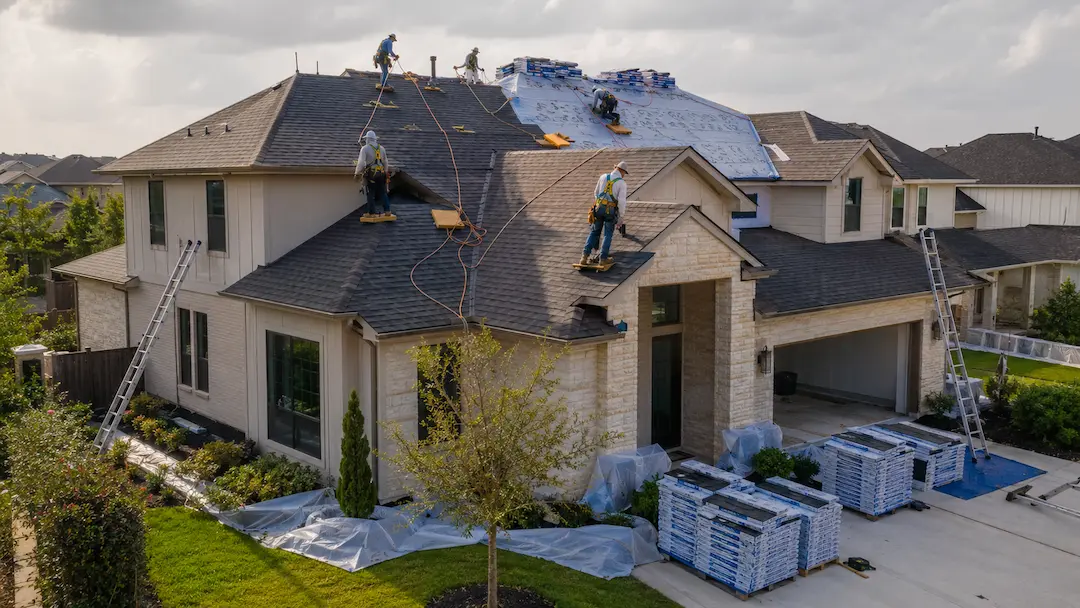
If your roof is leaking, showing signs of storm damage, or approaching the end of its expected lifespan, you are probably wondering: How long does a roof replacement take?
For most residential properties in Houston, the actual roof replacement typically takes between one and three days. A smaller home with a simple asphalt shingle roof may be completed in a single day, while larger or more complex roofing systems may require several days.
However, the installation itself is only one part of the process. Inspections, material selection, insurance approvals, permits, scheduling, weather conditions, and unexpected roof damage can all influence the complete timeline.
Knowing what to expect before the project begins can help you prepare your home, avoid unnecessary stress, and understand why certain roof replacements take longer than others.
How Long Does a Roof Replacement Take on Average?
A typical asphalt shingle roof replacement in Houston generally takes approximately one to three working days once installation begins.
Some projects can be completed in one day when:
- The home is relatively small
- The roof has a simple design
- The roof has a moderate slope
- The existing decking is in good condition
- Materials are already available
- Weather conditions remain favorable
- The roofing crew is properly staffed
A roof replacement may take three days or longer when the property has multiple stories, steep slopes, several valleys, chimneys, skylights, dormers, or other architectural features.
Roofing material also makes a difference. Asphalt shingles are generally installed faster than metal roofing, tile, slate, or specialty roofing systems.
The Complete Roof Replacement Timeline
Although the installation may only take a few days, the complete roof replacement process starts before the roofing crew arrives.
Here is what Houston homeowners can generally expect.
Step 1: Roof Inspection and Assessment
The first step is a professional roof inspection.
During the inspection, the roofing contractor evaluates the condition of the shingles, flashing, vents, gutters, underlayment, and other visible roofing components. The contractor may also look for signs of:
- Missing or damaged shingles
- Granule loss
- Water intrusion
- Soft or damaged roof decking
- Improper flashing
- Poor ventilation
- Hail or wind damage
- Previous repairs
- Sagging roof sections
The inspection helps determine whether the roof needs a complete replacement or whether repairs may still be appropriate.
If the roof was damaged by a storm, the inspection may also help document visible damage for an insurance claim.
Step 2: Estimate and Material Selection
After the inspection, the roofing contractor prepares an estimate based on the size, slope, materials, labor requirements, and condition of the existing roof.
Homeowners then select their preferred roofing material, shingle style, color, and available warranty options.
Asphalt architectural shingles are a common choice for Houston homes because they offer a balance of durability, appearance, affordability, and installation speed.
Material availability can affect the schedule. Standard colors and products may be available quickly, while specialty shingles or custom materials may take longer to obtain.
Step 3: Scheduling the Roof Replacement
Once the estimate is approved and materials are ordered, the contractor schedules the installation.
The waiting period before installation depends on several factors, including:
- Roofing crew availability
- Material delivery times
- Weather forecasts
- Insurance claim approvals
- HOA requirements
- Permit requirements
- Demand following a major storm
After severe hail, wind, or hurricane-related weather, roofing companies throughout the Houston area may experience increased demand. This can make scheduling take longer than usual.
A professional contractor should communicate clearly about expected start dates and notify you if weather or material delays affect the schedule.
Step 4: Preparing the Property
Before removing the existing roof, the crew prepares the surrounding property.
This may include placing protective coverings over landscaping, siding, windows, air-conditioning units, patios, and outdoor furniture. A dumpster or debris trailer may also be positioned near the home.
Homeowners can help prepare by:
- Moving vehicles away from the driveway
- Removing fragile decorations from walls and shelves
- Covering belongings stored in the attic
- Moving patio furniture and outdoor equipment
- Cutting the grass so loose nails are easier to locate
- Keeping children and pets away from work areas
- Informing nearby neighbors about the upcoming project
Roof replacement can create vibrations throughout the home, so securing fragile objects is especially important.
Step 5: Removing the Existing Roof
On the first day of installation, the roofing crew removes the existing shingles and other roofing materials.
Removing the old roof allows the contractor to inspect the condition of the decking underneath. This part of the roof is not always fully visible during the initial inspection.
If the decking is dry, solid, and structurally sound, installation can continue without significant delays.
However, if the crew discovers rotted wood, moisture damage, sagging areas, or weakened decking, those sections must be repaired or replaced before the new roofing system is installed.
This is one of the most common reasons a roof replacement takes longer than originally expected.
Step 6: Installing the New Roofing System
Once the decking is ready, the crew begins installing the new roofing system.
Depending on the roof and selected materials, this process may include:
- Roof decking repairs
- Drip edge installation
- Ice and water protection in vulnerable areas
- Synthetic or felt underlayment
- Valley protection
- New flashing
- Starter shingles
- Asphalt shingles
- Ridge caps
- Pipe boots
- Roof vents
- Ventilation components
- Sealants around roof penetrations
Proper installation around chimneys, walls, skylights, valleys, vents, and pipes is especially important. These areas are more vulnerable to water intrusion when flashing or sealants are installed incorrectly.
A reputable roofing contractor should never rush these details simply to finish the project faster.
Step 7: Cleanup and Final Inspection
After the roof installation is complete, the crew removes unused materials, old roofing debris, packaging, and equipment from the property.
The cleanup process should include a careful inspection of the driveway, lawn, landscaping, patios, and surrounding areas. Roofing crews commonly use magnetic tools to collect loose nails.
The contractor should then conduct a final inspection to confirm that:
- Shingles are installed correctly
- Flashing is properly secured
- Roof penetrations are sealed
- Vents are installed correctly
- Ridge caps are aligned
- Gutters and surrounding areas are clean
- The completed work meets the project requirements
Homeowners should also receive information about warranties, maintenance recommendations, and any roof documentation associated with the project.
What Factors Affect How Long a Roof Replacement Takes?
No two roofing projects are exactly the same. Several factors can change the length of the installation.
Roof Size
A larger roof requires more materials, removal work, underlayment, flashing, shingles, and cleanup.
Roofing size is usually measured in squares. One roofing square equals 100 square feet of roof area.
A smaller roof may be completed in one day, while a larger home may require multiple days even with favorable conditions.
Roof Design and Complexity
Simple roofs with fewer slopes and penetrations are generally faster to replace.
Projects take longer when the roof includes:
- Multiple valleys
- Dormers
- Skylights
- Chimneys
- Multiple roof levels
- Steep slopes
- Complex angles
- Low-access sections
- Numerous vents or pipe penetrations
These features require additional cutting, flashing, safety precautions, and attention to detail.
Roof Pitch
A steep roof is more difficult and dangerous to work on than a low-slope or moderately pitched roof.
Roofing crews may need additional safety equipment, harnesses, roof jacks, or scaffolding. Material movement may also be slower on a steep roof.
These precautions can extend the timeline, but they are necessary for safety and quality.
Roofing Material
The selected roofing material has a major impact on installation time.
Asphalt shingles are usually the fastest residential roofing material to install. Metal roofing, tile, slate, and specialty products often require more preparation, specialized labor, and detailed installation.
Changing from one type of roofing material to another may also require structural modifications or additional decking preparation.
Number of Existing Roof Layers
If the home has more than one layer of old roofing material, removal may take longer.
Additional layers create more debris and may make it more difficult to inspect or access the roof decking. Local requirements and manufacturer specifications may also require all previous roofing layers to be removed before installation.
Hidden Roof Damage
Damaged decking, moisture problems, rotted wood, and structural issues can extend the project.
Because much of the decking is hidden until the old roof is removed, contractors may not know the full extent of the damage beforehand.
It is helpful to include some flexibility in your timeline and budget for possible decking repairs.
How Houston Weather Can Delay a Roof Replacement
Weather is one of the most important scheduling factors for roofing projects in Houston.
The area’s heat, humidity, rain, thunderstorms, high winds, and tropical weather can all affect installation.
Rain and Wet Conditions
Roofing materials should not be installed over wet or saturated decking.
Moisture trapped beneath underlayment or shingles can contribute to wood damage, mold growth, premature material failure, and future leaks.
Rain also makes roof surfaces slippery and unsafe for workers. If storms are expected, the contractor may postpone the project or delay removing certain sections of the roof.
Professional roofers monitor forecasts carefully and avoid exposing more of the roof than they can safely protect.
Extreme Houston Heat
Houston summers can produce extremely hot roof surfaces.
High temperatures can create unsafe working conditions and may make roofing materials more difficult to handle. Crews may start earlier in the morning, take additional hydration breaks, or temporarily pause work during the hottest part of the day.
These adjustments may extend the project slightly but help protect the workers and support proper installation.
High Winds
Strong winds can make it dangerous to carry and position shingles, underlayment, metal flashing, tools, and large roofing materials.
Wind may also prevent materials from being aligned or secured correctly.
When wind conditions are unsafe, delaying installation is better than risking worker safety or improper installation.
Tropical Storms and Hurricanes
Houston homeowners must also consider tropical storms and hurricane-related weather.
Even when a storm does not directly affect the property, regional weather systems may produce heavy rainfall, strong winds, transportation delays, and material shortages.
Following a major storm, the demand for roofing inspections and replacement services may also increase significantly.
Can You Stay Home During a Roof Replacement?
In most cases, homeowners can remain inside the property during a roof replacement.
However, the process can be loud and disruptive. You may hear hammering, equipment, footsteps, scraping, and materials moving across the roof.
There may also be vibrations inside the home, especially during removal.
People who work from home, have small children, own anxious pets, or are sensitive to noise may prefer to spend part of the day elsewhere.
Make sure pets remain indoors or in a secure location because gates may be opened and roofing debris may temporarily be present around the property.
Can a Roof Replacement Be Completed in One Day?
Yes, a roof replacement can sometimes be completed in one day.
This is most realistic when the home has a smaller, simple roof, uses standard asphalt shingles, has minimal decking damage, and experiences good weather.
However, homeowners should not select a contractor based only on who promises the fastest completion.
A roof is a complete system that includes decking, underlayment, flashing, ventilation, shingles, seals, and drainage components. Rushing any of these areas can contribute to future leaks or premature roof failure.
A project that takes two or three days may simply require more detailed preparation or repair work.
How to Avoid Unnecessary Roof Replacement Delays
Some delays are unavoidable, especially when they involve weather or hidden damage. However, homeowners can help keep the project moving by:
- Scheduling the inspection early
- Selecting materials promptly
- Reviewing the estimate carefully
- Responding quickly to contractor questions
- Completing HOA approvals in advance
- Coordinating insurance documentation
- Clearing the driveway and exterior work areas
- Being available if unexpected repairs require approval
Good communication between the homeowner and roofing contractor can prevent minor decisions from delaying the project.
Questions to Ask Your Houston Roofing Contractor
Before the project begins, ask your contractor:
- How long is the installation expected to take?
- What could cause the timeline to change?
- How will the roof be protected if it rains?
- What happens if damaged decking is discovered?
- Who will communicate scheduling updates?
- How will the property and landscaping be protected?
- What does the cleanup process include?
- Will a final inspection be performed?
- What warranties are included?
Clear answers can help you understand what to expect and identify a contractor who prioritizes communication and proper planning.
Plan Your Houston Roof Replacement with Confidence
So, how long does a roof replacement take in Houston?
Most residential asphalt shingle roof replacements take approximately one to three days of active installation. Smaller and simpler roofs may be completed in a single day, while larger homes, steep slopes, complex designs, specialty materials, decking repairs, or weather delays can extend the project.
The complete process may take longer when inspections, insurance claims, material ordering, HOA approvals, and scheduling are included.
The most reliable way to receive an accurate timeline is to schedule a professional roof inspection. Rhinovations Inc. provides roof replacement services designed for Houston’s challenging weather conditions, with clear recommendations and dependable workmanship from the initial inspection through final cleanup.
Contact Rhinovations Inc. to schedule your free roof inspection and receive a personalized roof replacement plan.