




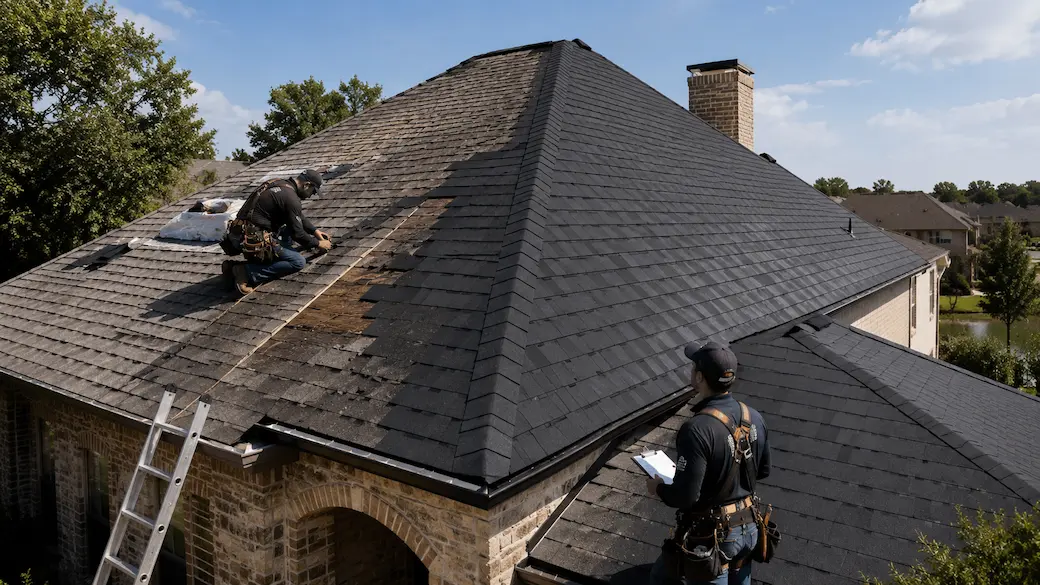
When a roofing problem appears, one of the first questions homeowners ask is whether they need a repair or a complete roof replacement. Choosing between roof repair vs. roof replacement is not always easy, especially when the visible damage is only part of the problem.
Houston-area roofs are regularly exposed to intense heat, ultraviolet radiation, heavy rain, high humidity, hail, and strong winds. Over time, these conditions can affect shingles, flashing, underlayment, ventilation, and roof decking.
A professional roof inspection can help determine whether the problem is limited to one area or whether the entire roofing system is beginning to deteriorate. This guide explains the differences between roof repair and roof replacement, the signs that may point toward each option, and the factors homeowners should consider before making a decision.
What Is the Difference Between Roof Repair and Roof Replacement?
A roof repair focuses on correcting a specific problem without removing the entire roofing system.
Common roof repairs include:
- Replacing missing or damaged shingles
- Sealing exposed fasteners
- Repairing flashing
- Correcting a small roof leak
- Replacing a damaged pipe boot
- Repairing a limited storm-damaged section
- Correcting a small area of damaged decking
A roof replacement involves removing most or all of the existing roofing materials and installing a new roofing system.
Depending on the condition of the roof, replacement may include:
- Removing old shingles
- Replacing damaged roof decking
- Installing new underlayment
- Replacing flashing
- Improving attic ventilation
- Installing new shingles or another roofing material
- Sealing roof penetrations and vulnerable areas
The right option depends on the age of the roof, the extent of the damage, the number of previous repairs, and the condition of the materials beneath the shingles.
When Roof Repair May Be the Better Option
Roof repair is often appropriate when the problem is isolated and the rest of the roofing system remains in good condition.
The damage is limited to a small area
A few missing shingles after a storm do not automatically mean the entire roof needs to be replaced.
If the surrounding shingles are still securely attached and the underlying materials are dry and structurally sound, a localized repair may restore the affected area.
The roof is relatively young
A newer roof may still have many years of useful life remaining.
If the problem is caused by a damaged vent, flashing defect, loose shingle, or isolated leak, repairing the specific issue may be more practical than replacing the complete roof.
The source of the leak is clear
Some roof leaks originate from a specific area, such as:
- Chimney flashing
- Plumbing vents
- Roof valleys
- Skylights
- Roof-to-wall connections
- Exposed fasteners
- Damaged pipe boots
When the source is correctly identified and the surrounding materials remain healthy, a targeted repair may solve the problem.
Storm damage is minor
Wind, hail, or falling debris may affect only one section of a roof.
If the damage is limited and the roof deck remains intact, replacing the affected shingles and repairing the vulnerable area may be enough.
The repair can provide a dependable long-term result
A repair should do more than temporarily hide the problem. The contractor should determine whether the repair can properly integrate with the existing roofing system and remain secure through future heat, rain, and wind.
When Roof Replacement May Be the Better Choice
Roof replacement is usually more appropriate when the roof is aging, damage is widespread, or repeated repairs are no longer providing reliable protection.
The roof is near the end of its useful life
Roofing materials gradually deteriorate over time.
Older shingles may:
- Lose protective granules
- Become brittle
- Curl at the edges
- Crack
- Lift during strong winds
- Become difficult to repair without breaking
Repairing one section of an older roof may stop a current leak while other areas continue to deteriorate.
Damage appears across multiple sections
Widespread problems may include:
- Missing shingles on several slopes
- Multiple active leaks
- Significant granule loss
- Hail damage across the roof
- Lifted or creased shingles
- Deteriorated flashing
- Soft areas in the roof deck
When damage affects a large part of the roof, performing several individual repairs may not provide the same reliability as replacement.
Leaks continue to return
One isolated leak can often be repaired. However, recurring leaks may indicate problems with the underlayment, decking, flashing, installation, or overall condition of the roof.
Water intrusion can damage:
- Insulation
- Ceilings
- Drywall
- Framing
- Paint
- Flooring
- Personal belongings
If leaks repeatedly return after previous repairs, the complete roofing system should be evaluated.
The roof decking is damaged
Roof decking is the structural surface beneath the shingles and underlayment.
If decking becomes soft, rotten, swollen, warped, or weakened by moisture, new shingles cannot be properly installed over it.
Damaged decking usually needs to be removed and replaced before the roofing system can be restored.
The roof has extensive storm damage
Severe weather can affect more than shingles.
A strong storm may damage:
- Flashing
- Underlayment
- Roof vents
- Gutters
- Ridge caps
- Decking
- Roof edges
- Chimney connections
When damage is spread throughout the roofing system, replacement may be a more dependable option than multiple patches.
Important Factors to Consider
Roof age
The age of the roof is one of the most important factors.
A localized repair may make sense on a newer roof. The same repair may provide limited value on a roof that is already showing widespread deterioration.
Extent of the damage
Damage limited to one small area is different from damage affecting several slopes.
A proper inspection should evaluate the entire roofing system rather than focusing only on the most obvious leak or missing shingle.
Condition of the shingles
The shingles surrounding the damaged area need to remain flexible enough to complete the repair.
Older shingles may crack when lifted, making it difficult to replace damaged materials without affecting nearby areas.
Matching materials
Matching older shingles can be difficult.
Even when the same color or product is still available, years of exposure to sunlight and weather may make new shingles look different from the existing roof.
Previous repairs
A roof with several patches may be showing signs that individual repairs are no longer enough.
Homeowners should consider how often the roof has needed repairs and whether the same problems continue to return.
Future plans for the home
Homeowners planning to remain in the property for many years may prioritize long-term reliability.
Those preparing to sell should still address active leaks and structural concerns, but the most appropriate choice will depend on the condition of the roof and the needs of the property.
Is Roof Repair Always Less Expensive?
A single repair usually costs less than replacing an entire roof. However, the lowest immediate price is not always the lowest long-term cost.
Repeated repairs can become expensive when new problems continue to appear.
Before choosing a repair, consider:
- How long the repair is expected to last
- Whether nearby shingles are deteriorating
- Whether the underlayment is damaged
- Whether the decking is still strong
- Whether the roof has other vulnerable areas
A replacement may cost more initially, but it can address several aging components at the same time and provide a more predictable roofing system.
Can You Replace Only Part of a Roof?
Partial roof replacement may be possible when damage is limited to one clearly separated section.
However, the contractor must evaluate:
- How the new section will connect to the existing roof
- Whether flashing can be integrated properly
- Whether matching materials are available
- Whether the remaining roof has enough useful life
- Whether the repair will affect roof drainage
Replacing one section of a heavily aged roof may only delay the need for a complete replacement.
How a Professional Roof Inspection Helps
The difference between a repairable problem and a roof that needs replacement is not always visible from the ground.
A detailed roof inspection may include checking:
- Shingle condition
- Missing or lifted shingles
- Roof flashing
- Pipe boots and vents
- Roof valleys
- Ridge caps
- Signs of hail or wind damage
- Soft or sagging roof decking
- Attic ventilation
- Interior water stains
- Previous repair areas
- Gutters and roof edges
After the inspection, the homeowner should receive a clear explanation of the findings and understand why repair, replacement, or monitoring is being recommended.
Common Mistakes Homeowners Should Avoid
Waiting for a small leak to become larger
A small ceiling stain may mean water has already passed through several roofing layers.
Waiting can allow moisture to damage insulation, drywall, decking, and framing.
Assuming every storm requires replacement
Not every storm causes replacement-level damage.
A professional inspection can identify whether the damage is isolated, cosmetic, functional, or widespread.
Repairing only the visible symptom
Water does not always enter directly above the interior stain.
It can travel along decking, rafters, nails, and other building components before becoming visible inside the home.
Choosing based only on price
Roofing decisions should not be based only on the lowest estimate.
Materials, installation, flashing, ventilation, cleanup, and workmanship all affect the long-term performance of the roof.
Roof Repair vs. Roof Replacement: Which Is Right for Your Home?
Roof repair may be the right choice when:
- The roof is relatively young
- Damage is isolated
- The decking is in good condition
- The leak has a clear source
- The repair can provide a dependable result
Roof replacement may be more appropriate when:
- The roof is aging
- Damage is widespread
- Leaks continue to return
- The decking is compromised
- Shingles are brittle or severely deteriorated
- Previous repairs are no longer effective
The best decision should be based on a complete inspection and an honest evaluation of both immediate needs and long-term protection.
Frequently Asked Questions
A repair may be sufficient when damage is limited to a small area and the rest of the roofing system remains healthy. Replacement may be recommended when the roof is older, damage is widespread, leaks are recurring, or the decking is damaged.
Not necessarily. One leak may come from damaged flashing, a vent, a pipe boot, or a localized defect. Multiple leaks or recurring water intrusion may indicate a larger roofing problem.
Yes, missing shingles can often be replaced if the surrounding materials are still in good condition and compatible shingles are available.
Replacement depends on the severity and extent of the damage. A professional inspection can determine whether the hail damage is isolated, repairable, or widespread.
Some older roofs can be repaired. However, brittle shingles, recurring leaks, unavailable materials, and widespread wear may make replacement more practical.
Schedule a Professional Roof Inspection
Unsure whether your Houston-area home needs roof repair or roof replacement?
RHINOVATIONS INC. can inspect your roofing system, identify visible and concealed concerns, and explain the available options clearly.
Request your roof inspection before a small problem develops into more extensive water or structural damage.
Call RHINOVATIONS INC. at (281) 698-0843 or request an inspection through our contact page.