




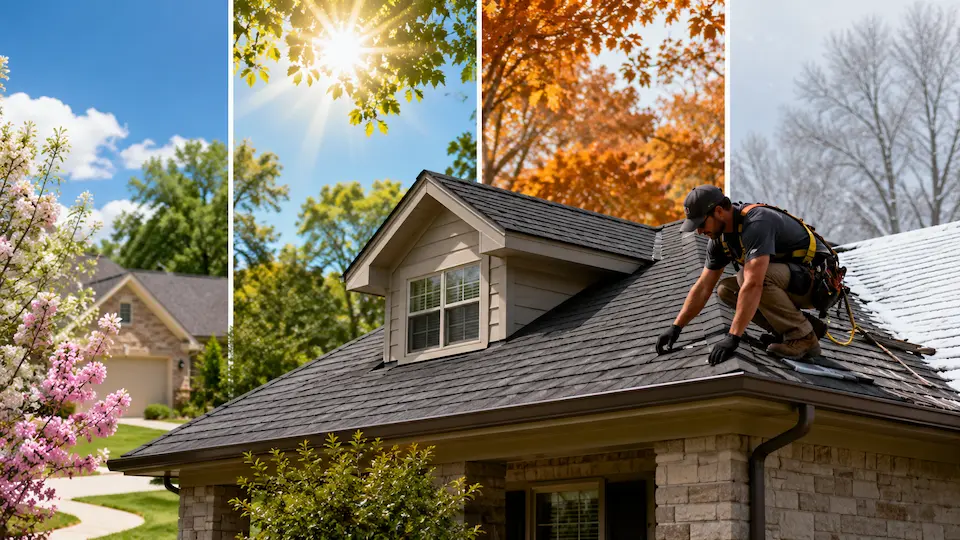
A roof is one of those parts of your home you do not think about every day until there is a leak, a missing shingle, a stained ceiling, or storm damage that suddenly needs attention. That is why following a seasonal roof maintenance checklist is one of the smartest ways to protect your home year-round.
In Houston, roof maintenance is especially important. Between intense sun, heavy rain, wind, humidity, hurricane-season storms, and occasional hail, your roof goes through a lot. Small issues like loose flashing, clogged gutters, cracked shingles, or minor roof leaks can turn into expensive repairs if they are ignored for too long.
At Rhinovations, we look at roof maintenance through the lens of real Texas weather. Our team works with roof repairs, roof replacements, storm damage restoration, roof leak repair, emergency roof repair, gutter work, and free roof inspections across Houston, Katy, and nearby areas. That means we see the same pattern often: homeowners who catch roof problems early usually save money, stress, and interior damage later.
Use this guide as a practical, homeowner-friendly checklist to inspect your roof by season, understand what warning signs to look for, and know when it is time to call a professional roofing contractor.
Why Seasonal Roof Maintenance Matters
Seasonal roof maintenance helps your roof do what it is supposed to do: protect your home from water, wind, heat, debris, and structural damage. A roof is not just shingles. It is a full system made up of shingles or metal panels, underlayment, decking, flashing, ventilation, gutters, drainage, sealants, pipe boots, vents, and more.
When one part of that system fails, the damage can spread quickly.
For example, a small crack around a vent pipe may not look serious from the ground. But after several heavy rainstorms, that small opening can let water into the attic. From there, moisture can damage insulation, drywall, ceilings, framing, and even electrical components. By the time a water stain appears inside the house, the roof issue may have been active for weeks or months.
This is why a roof maintenance checklist should not be treated as optional. It is preventive care for your home.
At Rhinovations, when we inspect roofs in Greater Houston, we pay close attention to the details that homeowners often miss: lifted shingles, soft spots, exposed nails, weak flashing, clogged gutters, storm-related granule loss, and signs of hidden leaks. These details matter because Houston weather does not give weak spots much time to survive.
Small Roof Problems Can Turn Into Expensive Repairs
Many roof problems start small. A few missing shingles, a clogged downspout, or a loose flashing edge may not feel urgent. But roofs are designed to shed water in a very specific way. Once water starts moving where it should not, damage can spread behind the surface.
Common small issues that can become expensive include:
- Cracked, curled, or missing shingles
- Loose or rusted flashing
- Clogged gutters and downspouts
- Exposed nail heads
- Damaged pipe boots
- Moss, algae, or moisture buildup
- Poor attic ventilation
- Tree branches rubbing against the roof
- Water stains on ceilings or walls
- Granules collecting in gutters
The earlier these issues are found, the easier they usually are to repair.
Houston Weather Makes Preventive Roof Care Even More Important
Houston homeowners deal with a roofing environment that is different from many other parts of the country. The combination of heat, humidity, heavy rain, tropical storms, and strong UV exposure can wear down roofing materials faster.
Summer heat can dry out shingles and sealants. Storms can lift shingles, loosen flashing, and damage gutters. Humidity can contribute to mold or mildew growth. Tree debris can trap moisture against the roof surface. During hurricane season, even a small weakness in the roofing system can become a serious problem.
That is why a seasonal approach works so well. Instead of waiting until there is visible damage inside the home, you inspect and maintain the roof before each major weather shift.
Complete Seasonal Roof Maintenance Checklist
A good seasonal roof maintenance checklist should be simple enough for homeowners to follow, but complete enough to catch common roof problems before they become costly.
You do not need to climb onto your roof to do every task. In fact, we do not recommend getting on the roof unless you have the right training, equipment, and safety conditions. Many roof problems can be spotted from the ground, from a ladder, from inside the attic, or during a professional inspection.
Below is a practical checklist broken down by season.
Spring Roof Maintenance Checklist
Spring is one of the best times to inspect your roof because it gives you a chance to catch problems after winter and before the harsher summer heat arrives.
Start by walking around your home and looking up at the roof from the ground. Check for missing shingles, lifted edges, sagging areas, dark streaks, debris buildup, and anything that looks uneven. If you notice shingles that appear cracked, curled, loose, or out of place, schedule a roof inspection before the issue gets worse.
Next, check your gutters and downspouts. Spring rain can expose drainage problems quickly. Gutters should move water away from your roofline and foundation. If gutters are clogged with leaves, branches, granules, or dirt, water can back up under the roof edge and cause fascia damage, soffit damage, or leaks.
Your spring checklist should include:
- Inspect shingles for cracks, curling, lifting, or missing areas
- Clean gutters and downspouts
- Look for shingle granules in gutters
- Trim branches touching or hanging over the roof
- Check attic spaces for moisture or musty smells
- Look for stains on ceilings and walls
- Inspect flashing around chimneys, vents, and skylights
- Make sure downspouts direct water away from the home
- Schedule a professional roof inspection if storm damage is suspected
At Rhinovations, we often recommend spring inspections because this is when homeowners can get ahead of problems before summer heat and storm season put more stress on the roof.
Summer Roof Maintenance Checklist
Summer roof maintenance in Houston is all about heat, UV exposure, ventilation, and storm readiness. High temperatures can affect shingles, sealants, flashing, and attic conditions. A poorly ventilated attic can also make your home less energy efficient and put extra stress on the roof system.
During summer, check for signs that shingles are drying out, blistering, curling, or losing granules. Asphalt shingles are designed to withstand heat, but constant Texas sun can shorten the lifespan of older or poorly installed roofing materials.
Attic ventilation is also important. If hot air cannot escape properly, heat can build up beneath the roof deck. This can contribute to premature roof aging and make cooling your home more difficult.
Your summer checklist should include:
- Look for heat-damaged shingles
- Check for blistering, curling, or cracking
- Inspect attic ventilation
- Make sure vents are not blocked
- Check for signs of roof leaks after summer storms
- Inspect gutters after heavy rain
- Look for loose flashing around roof penetrations
- Remove debris after windy weather
- Prepare for hurricane season
- Document visible damage with photos
Because Rhinovations handles storm damage repair and roof leak repair, we know summer is not just about heat. It is also the season when sudden storms can expose weak points in the roof. If you see missing shingles, water stains, or debris impact after a storm, do not wait for the next rainfall to see what happens.
Fall Roof Maintenance Checklist
Fall is the ideal time to prepare your roof for the cooler months and make sure it is ready for seasonal rain, wind, and debris. Even though Houston winters are not usually as harsh as northern climates, fall maintenance is still important.
Leaves, pine needles, branches, and other debris can collect in valleys, gutters, and roof edges. When debris holds moisture against your roof, it can speed up deterioration and create drainage problems.
Fall is also a good time to check the areas around chimneys, skylights, vents, and flashing. These are common leak points, especially after months of heat and storm exposure.
Your fall checklist should include:
- Remove leaves and debris from the roof surface
- Clean gutters and downspouts again
- Check roof valleys for buildup
- Inspect flashing around chimneys, vents, and skylights
- Trim overhanging branches
- Look for signs of animal activity near vents or roof edges
- Check ceilings for stains after fall rain
- Inspect attic insulation and ventilation
- Review any damage before the end of storm season
- Schedule roof repairs before small issues spread
Fall maintenance is also a smart time to review your roof’s overall age and condition. If your roof has needed repeated repairs, has widespread granule loss, or shows signs of aging across multiple areas, it may be time to talk with a roofing contractor about whether repair or replacement makes more sense.
Winter Roof Maintenance Checklist
Houston winters are usually mild, but that does not mean homeowners should ignore roof maintenance. Cooler weather, rain, wind, and temperature changes can still reveal roof problems.
Winter is a good time to monitor the inside of your home. Look for water stains, bubbling paint, musty smells, or damp insulation in the attic. These signs can point to hidden roof leaks.
You should also continue checking gutters and downspouts. Even in winter, drainage matters. If water cannot flow away from your roof properly, it can damage fascia boards, soffits, siding, landscaping, and foundation areas.
Your winter checklist should include:
- Look for interior water stains
- Check attic spaces after heavy rain
- Inspect gutters for blockages
- Make sure downspouts drain away from the foundation
- Look for loose shingles after wind
- Watch for moisture around vents or chimneys
- Check for sagging areas from trapped moisture
- Avoid walking on the roof when surfaces are wet or slippery
- Schedule a professional inspection if leaks appear
- Plan spring repairs early if damage is found
At Rhinovations, we encourage homeowners to treat winter as a monitoring season. You may not need major work, but you should stay alert. A small leak found in winter can often be repaired before spring storms make it worse.
What to Check After Heavy Rain, Wind, or Hail
Seasonal maintenance is important, but storm-related inspections are just as critical. In Houston, a roof can look fine one week and suffer damage the next after high winds, hail, or heavy rainfall.
After a major weather event, inspect your property safely from the ground. Do not climb on a wet or damaged roof. Look for visible signs of storm damage, then schedule a professional inspection if anything seems off.
Signs of Storm Damage
Storm damage is not always obvious. Sometimes shingles are missing completely. Other times the damage is subtle, such as lifted shingles, bruising from hail, or loosened flashing.
Look for:
- Missing shingles
- Shingles lifted by wind
- Hail marks on shingles or metal components
- Granules collecting around downspouts
- Dented gutters or vents
- Damaged flashing
- Fallen branches on the roof
- Exposed underlayment
- Water stains indoors
- Sudden roof leaks after rain
Because Rhinovations works with storm damage restoration, we know documentation matters. Taking clear photos after a storm can help you keep track of changes and may be useful if an insurance claim becomes necessary.
Signs of a Hidden Roof Leak
Not all leaks drip openly into the living room. Many start slowly inside attic spaces, behind walls, or around roof penetrations.
Watch for:
- Brown or yellow ceiling stains
- Bubbling paint
- Musty odors
- Damp insulation
- Mold or mildew near the attic
- Water marks around vents
- Soft drywall
- Dripping sounds during rain
- Stains near chimneys or skylights
A hidden roof leak should be taken seriously. By the time you notice visible interior damage, water may have already traveled through several layers of your home.
When to Document Damage for an Insurance Claim
If your roof may have storm damage, document it as soon as it is safe. Take photos of visible roof damage, damaged gutters, fallen branches, interior leaks, water stains, and any debris impact.
A professional roofing contractor can also provide inspection notes and photos. Rhinovations supports homeowners with storm damage repair and insurance-related documentation, helping identify whether the damage appears consistent with wind, hail, or other weather events.
DIY Roof Maintenance vs. Professional Roof Inspection
Some roof maintenance tasks are safe for homeowners. Others should be handled by a licensed or experienced roofing contractor.
The goal is not to put yourself at risk. The goal is to catch problems early.
Safe Tasks Homeowners Can Handle
Most homeowners can safely handle basic visual inspections and simple maintenance from the ground or with proper ladder safety.
DIY-friendly roof maintenance tasks include:
- Walking around the home to inspect the roof visually
- Cleaning accessible gutters if safe
- Checking downspout flow
- Looking for water stains indoors
- Inspecting attic spaces for moisture
- Trimming small branches away from the roof
- Removing light debris from accessible areas
- Taking photos after storms
- Watching for changes over time
A pair of binoculars can help you inspect shingles, flashing, vents, and roof edges from the ground.
Roof Issues That Need a Roofing Contractor
Some issues should not be handled as a DIY project. Roof work can be dangerous, and improper repairs can make problems worse.
Call a professional roofing contractor if you notice:
- Active roof leaks
- Missing shingles
- Widespread granule loss
- Storm or hail damage
- Soft or sagging roof areas
- Damaged flashing
- Cracked pipe boots
- Repeated leaks in the same area
- Water entering the attic
- Damage near chimneys, skylights, or valleys
At Rhinovations, our free roof inspections are designed to help homeowners understand what is happening without guessing. Sometimes the solution is a simple repair. Other times, a larger issue needs attention. Either way, an inspection gives you clarity.
Roof Maintenance Tips for Houston and Katy Homes
Roof maintenance should always be adapted to your local climate. A checklist written for snowy northern states will not fully match the needs of a Houston or Katy home.
Here, the biggest concerns are heat, humidity, rain, wind, hail, hurricanes, and drainage.
Heat, Humidity, and UV Exposure
Texas heat can be tough on roofing materials. Over time, UV exposure can contribute to shingle aging, sealant breakdown, and granule loss. Humidity can also create conditions where algae, mildew, and moisture problems appear more easily.
For Houston-area homes, pay attention to:
- Shingle color changes
- Granule loss
- Cracked sealants
- Attic heat buildup
- Ventilation problems
- Algae or dark streaking
- Moisture near roof penetrations
Proper ventilation and regular inspections can help extend the life of your roof.
Gutters, Drainage, and Tree Debris
Gutters are part of your roofing system. If they fail, your roof can suffer.
Clogged gutters can push water under roof edges. Poor drainage can damage fascia, soffits, siding, landscaping, and even the foundation. Tree debris can also trap moisture in valleys and along rooflines.
For Houston homes with nearby trees, gutter maintenance should happen more than once a year. Ideally, check gutters in spring, fall, and after major storms.
Preparing Before Hurricane Season
Before hurricane season, your roof should be inspected for weak points. Loose shingles, worn flashing, clogged gutters, and existing leaks can all become bigger problems during strong wind and rain.
Before storm season, consider:
- Scheduling a roof inspection
- Repairing loose or missing shingles
- Cleaning gutters and downspouts
- Trimming branches near the roof
- Checking attic ventilation
- Taking photos of the roof’s current condition
- Reviewing previous repair areas
This is one of the areas where Rhinovations’ local experience matters. Houston weather can change quickly, and preventive maintenance is always easier than emergency roof repair during or after a storm.
How Rhinovations Helps Protect Your Roof Year-Round
A checklist is useful, but some roof issues need trained eyes. Rhinovations helps homeowners in Houston, Katy, and surrounding areas protect their homes with practical roofing solutions built for Texas conditions.
Our team works with roof repair, roof replacement, roof leak repair, storm damage repair, emergency roof repair, roof maintenance, gutter installation and repair, and professional inspections.
Free Roof Inspections
A free roof inspection can help you understand the condition of your roof before problems become expensive. During an inspection, a roofing professional can look for visible damage, weak points, drainage issues, flashing problems, storm damage, and signs of leaks.
For homeowners, this removes the guesswork. Instead of wondering whether a stain, missing shingle, or gutter issue is serious, you get a clear explanation of what is happening and what your options are.
Roof Repair, Roof Leak Repair, and Storm Damage Support
Roof maintenance often reveals repair needs. That does not always mean you need a full roof replacement. In many cases, targeted repairs can solve the issue if the damage is caught early.
Rhinovations can help with:
- Roof leak repair
- Missing or damaged shingles
- Storm damage repair
- Emergency roof repair
- Flashing repair
- Gutter repair
- Roof replacement when repairs are no longer enough
- Insurance-related damage documentation
Because we work with both repairs and replacements, our goal is to guide homeowners toward the solution that actually fits the condition of the roof.
Maintenance Designed for Texas Weather
Roof maintenance in Houston should not be generic. It should account for heat, humidity, storms, wind, rain, and hurricane-season risks.
That is why a seasonal approach makes sense. Inspect in spring. Prepare in summer. Clean and reinforce in fall. Monitor in winter. Repeat every year.
When done consistently, this rhythm can help extend the life of your roof and reduce the chances of surprise leaks.
Seasonal Roof Maintenance Checklist: Quick Summary
Here is a quick version of the checklist you can use throughout the year.
| Season | Main Roof Maintenance Tasks |
| Spring | Inspect shingles, clean gutters, check attic moisture, look for winter or storm damage |
| Summer | Check for heat damage, inspect ventilation, prepare for storms and hurricane season |
| Fall | Remove debris, clean gutters again, inspect flashing, trim branches |
| Winter | Monitor interior leaks, check attic after rain, keep drainage clear, plan repairs early |
For best results, combine homeowner visual checks with at least one professional roof inspection per year. You should also inspect your roof after major storms, hail, high winds, or heavy rain.
FAQs About Seasonal Roof Maintenance
You should visually inspect your roof at least twice a year, ideally in spring and fall. In Houston, it is also smart to check the roof after major storms, heavy rain, hail, or high winds. A professional roof inspection once a year can help catch issues that are not visible from the ground.
The most important task is checking for signs of water entry. Roof leaks can create expensive damage if ignored. Look for missing shingles, damaged flashing, clogged gutters, attic moisture, ceiling stains, and soft or sagging areas.
You do not need a full professional inspection after every small rain shower, but you should check your roof after strong wind, hail, heavy rain, or falling branches. If you see missing shingles, dents, granules in gutters, leaks, or interior stains, schedule an inspection.
Yes, roof maintenance can help prevent many leaks by catching problems early. Cleaning gutters, repairing flashing, replacing damaged shingles, improving drainage, and checking attic ventilation can all reduce leak risk.
Call a professional roofer if you notice active leaks, missing shingles, storm damage, damaged flashing, sagging roof areas, water stains, or repeated issues in the same area. You should also call before hurricane season if your roof is older or has not been inspected recently.
Conclusions
A seasonal roof maintenance checklist is one of the easiest ways to protect your home, extend the life of your roof, and avoid expensive water damage. For Houston homeowners, it is especially important because local roofs face intense sun, humidity, storms, wind, heavy rain, and hurricane-season risks.
The best approach is simple: inspect your roof by season, keep gutters clear, watch for leaks, document storm damage, and call a professional when something does not look right.
At Rhinovations, we help homeowners across Houston, Katy, and nearby areas with free roof inspections, roof repair, roof leak repair, storm damage repair, gutter services, emergency roof repair, and full roof replacement when needed. If your roof has not been checked recently, scheduling an inspection can give you peace of mind before the next storm rolls in.