




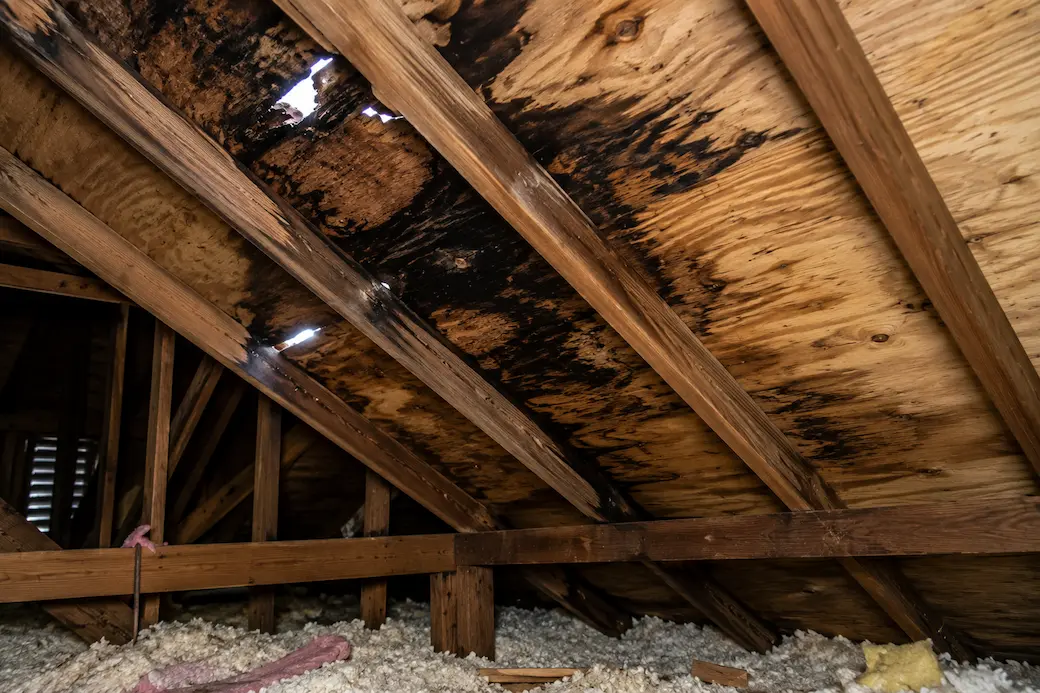
Shingles are the most visible part of a roof, but they are only one layer of the complete roofing system. Beneath the shingles and underlayment is the roof decking, the structural surface that supports the roofing materials.
When roof decking becomes wet, soft, warped, or rotten, installing new shingles over it will not solve the underlying problem.
Damaged decking can contribute to recurring leaks, sagging areas, loose roofing materials, and structural deterioration. Understanding the signs of roof decking damage can help Houston homeowners address moisture problems before they spread to insulation, ceilings, walls, or framing.
What Is Roof Decking?
Roof decking, sometimes called roof sheathing, is the solid layer installed over the roof framing.
It creates the surface to which underlayment, shingles, metal panels, and other roofing materials are attached.
Residential roof decking is commonly made from:
- Plywood
- Oriented strand board
- Wood planks in some older homes
The decking must remain dry, flat, securely fastened, and structurally sound.
When it loses strength, the materials installed above it may no longer remain properly supported or attached.
Why Roof Decking Damage Is a Serious Problem
Roof decking supports the roofing system and provides a secure base for fasteners.
When decking deteriorates:
- Roofing nails may not hold properly
- Shingles may move or lift
- Sections of the roof may sag
- Water may enter the attic
- Insulation may become wet
- Interior ceilings and walls may be damaged
- Framing may be exposed to moisture
Decking damage is often hidden beneath the shingles. This means homeowners may notice interior symptoms before they can see the damaged wood itself.
Common Signs of Roof Decking Damage
Sagging areas on the roof
One of the most concerning signs of roof decking damage is a visible dip, wave, or sag in the roof surface.
From the ground, the roofline should generally appear straight and consistent.
Sagging may result from:
- Moisture-damaged decking
- Weakened framing
- Excessive weight
- Installation problems
- Long-term water intrusion
A sagging roof should be evaluated promptly because the issue may involve more than the shingles.
Soft or spongy areas
Damaged roof decking may feel soft, flexible, or spongy under pressure.
This condition is normally discovered during a professional roof inspection. Homeowners should not walk on a roof that may contain weakened decking.
Soft spots often indicate that moisture has damaged the plywood, oriented strand board, or wood planks beneath the shingles.
Water stains in the attic
Dark stains, water marks, or discoloration on the underside of the roof deck can indicate current or previous moisture intrusion.
Some stains may remain after a leak has been repaired, so the area should also be checked for:
- Dampness
- Soft wood
- Rusted fasteners
- Fresh water trails
- Swelling
- Mold-like growth
An attic inspection can help determine whether the staining is old or connected to an active moisture problem.
Daylight visible through the roof
Light entering through cracks, holes, separated boards, or damaged roof penetrations is a warning sign.
Openings that allow light into the attic may also allow:
- Wind-driven rain
- Humidity
- Insects
- Dust
- Leaves
- Small debris
Visible openings should be inspected from the exterior to determine how water may be entering.
Recurring roof leaks
A leak that continues to return after surface repairs may indicate damaged decking, failed underlayment, defective flashing, or another concealed problem.
Water can travel along the underside of the roof deck before dripping into the attic or interior.
For that reason, the ceiling stain may not appear directly below the source of the leak.
Ceiling or wall discoloration
Brown stains, bubbling paint, peeling drywall, or damaged ceiling texture may indicate that water has passed through the roofing system.
By the time moisture becomes visible inside the living space, it may have already affected:
- Roof decking
- Insulation
- Rafters
- Ceiling materials
- Wall cavities
Interior stains should not be ignored, even when they appear small.
A musty smell in the attic
A persistent damp or musty odor can indicate trapped moisture, wet insulation, poor ventilation, or deteriorating wood.
Odor alone does not confirm decking damage. However, it should be investigated when combined with:
- Roof leaks
- Water stains
- Condensation
- Rusted nails
- Darkened wood
- High attic humidity
Rusted roofing nails
Rusted or corroded nail tips visible inside the attic may be a sign of moisture exposure or condensation.
Over time, corrosion can reduce the holding strength of roofing fasteners.
Rusted nails may also create small pathways through which water can move into the attic.
Shingles that continue to lift or come loose
Shingles may fail to remain attached when the decking beneath them has lost strength.
Fasteners driven into soft or deteriorated wood may not hold securely.
Replacing loose shingles without correcting weak decking can cause the same problem to return during future storms.
Uneven or wavy shingle lines
Shingles should lie relatively flat across a properly prepared roof surface.
Waves, raised sections, dips, or uneven lines may indicate:
- Warped decking
- Moisture swelling
- Gaps between decking panels
- Installation over an uneven surface
- Deterioration beneath the shingles
An uneven roof surface should be evaluated to determine whether the problem is cosmetic or structural.
What Causes Roof Decking Damage?
Long-term roof leaks
Even a small leak can weaken decking when moisture repeatedly enters the same area.
Water may enter through:
- Damaged shingles
- Failed flashing
- Exposed fasteners
- Worn pipe boots
- Roof valleys
- Vents
- Chimneys
- Roof-to-wall connections
Wind-driven rain
Strong storms can push water beneath lifted shingles or through vulnerable roof edges.
Once water reaches the underlayment and decking, it may remain trapped and contribute to deterioration.
Missing or damaged shingles
Shingles form the primary exterior weather-resistant covering.
Missing, cracked, lifted, or improperly sealed shingles leave the materials beneath them more vulnerable to moisture.
Failed flashing
Flashing directs water away from chimneys, walls, valleys, vents, and roof penetrations.
Improperly installed, damaged, or deteriorated flashing is a common source of concealed roof leaks.
Poor attic ventilation
Inadequate ventilation can trap heat and moisture inside the attic.
In humid climates, condensation may form on the underside of the roof deck and contribute to:
- Staining
- Swelling
- Rusted fasteners
- Wood deterioration
- Mold-like growth
Ventilation should be evaluated together with insulation and air sealing.
Plumbing or HVAC moisture
Not every attic moisture problem begins with the roof exterior.
Condensation or water may also come from:
- HVAC ducts
- Bathroom exhaust fans vented into the attic
- Plumbing leaks
- Air-conditioning equipment
- Improperly insulated ductwork
These sources can expose roof decking and framing to moisture.
Improper installation
Decking panels need proper spacing, support, alignment, and fastening.
Installation errors can contribute to:
- Buckling
- Movement
- Raised panel edges
- Uneven roof surfaces
- Reduced fastener performance
Falling branches or impact damage
Tree limbs and storm debris can crack or puncture shingles, underlayment, and decking.
Impact damage may not immediately create an interior leak, but the affected area can become vulnerable during later rainfall.
Can Roof Decking Damage Be Seen From the Ground?
Some decking problems create visible changes in the roof surface, including:
- Sagging
- Waves
- Dips
- Uneven shingle lines
- Sections that appear lower than the surrounding roof
However, many forms of decking damage cannot be confirmed from the ground.
The problem may be hidden beneath the shingles or visible only from inside the attic.
Homeowners should avoid walking on a roof that may contain soft or weakened decking. A damaged area may not safely support a person, even when the shingles appear intact.
How Roof Decking Is Inspected
A professional roofing inspection normally evaluates both the exterior roof and accessible interior areas.
The inspection may include:
- Checking the roofline for sagging
- Inspecting shingles for damage or movement
- Evaluating flashing around vents and walls
- Inspecting valleys and roof penetrations
- Looking for soft areas
- Examining the decking from the attic
- Checking for stains and dampness
- Evaluating attic ventilation
- Looking for rusted nails
In some cases, the full extent of damaged decking cannot be confirmed until the shingles and underlayment are removed.
During a roof replacement, additional damaged sheets or boards may be discovered after the existing roofing materials are removed.
Can Damaged Roof Decking Be Repaired?
Damaged roof decking can often be replaced in sections when the problem is limited to a specific area.
The roofing materials above the damaged section normally need to be removed so the decking can be accessed.
The damaged material is then removed and replaced with compatible decking that is properly supported and fastened.
Afterward, new underlayment, flashing, and roofing materials can be installed.
When decking damage is widespread or the roof is already near the end of its useful life, combining decking replacement with a complete roof replacement may be more practical.
Can New Shingles Be Installed Over Damaged Decking?
New shingles should not be installed over soft, rotten, severely warped, or structurally weakened decking.
Roofing fasteners need a solid surface to hold the shingles securely.
Damaged decking can prevent proper fastening and may allow the new roofing materials to:
- Move
- Lift
- Sag
- Become uneven
- Fail prematurely
Covering damaged decking can also hide the underlying problem and make future repairs more difficult.
What Happens If Damaged Decking Is Ignored?
Roof decking damage can become more expensive when moisture continues entering the system.
Possible consequences include:
- Worsening roof leaks
- Wet insulation
- Ceiling damage
- Drywall damage
- Peeling paint
- Interior stains
- Rusted fasteners
- Loose shingles
- Weakened framing
- Sagging roof sections
- Damage to personal property
Addressing the source of moisture early can help reduce the amount of material that needs to be removed and replaced.
How Houston Homeowners Can Help Prevent Decking Damage
Schedule roof inspections
Routine inspections can identify damaged shingles, flashing problems, exposed fasteners, and other conditions before they cause significant water intrusion.
Inspect the roof after severe weather
Hail, strong winds, heavy rain, and falling branches can damage roofing materials without causing an immediate visible leak.
A post-storm inspection can identify vulnerable areas before the next rainfall.
Keep gutters clear
Blocked gutters can cause water to collect near roof edges, fascia, and lower sections of decking.
Proper drainage helps move water away from the roofing system.
Maintain attic ventilation
Balanced attic ventilation helps reduce trapped heat and moisture.
Ventilation problems should be evaluated together with insulation and air sealing.
Repair leaks promptly
A small leak can affect a larger area when it continues through multiple storms.
Prompt repairs can help protect decking, insulation, framing, ceilings, and interior finishes.
Trim overhanging branches
Branches can scrape shingles, drop debris, block drainage, or fall during severe weather.
Proper tree maintenance can reduce the risk of roof impact and moisture accumulation.
Frequently Asked Questions About Roof Decking Damage
Damaged decking may appear dark, stained, swollen, warped, cracked, soft, rotten, or sagging. From inside the attic, you may also see water trails, rusted nails, visible openings, or deteriorated wood.
Not every short-term leak causes major decking damage. However, repeated or prolonged moisture exposure can weaken plywood, oriented strand board, and wood planks.
Decking may dry after the moisture source is corrected. However, drying does not restore wood that has already become rotten, delaminated, swollen, or structurally weak.
Yes. Fasteners may not hold securely when they are installed into soft or deteriorated decking, increasing the risk of shingle movement during strong winds.
Not necessarily. Decking that remains dry, flat, properly supported, and structurally sound may be reused. Damaged sections should be removed and replaced before the new roof is installed.
Visible sagging should be evaluated promptly. The cause may involve weakened decking, damaged framing, water intrusion, or excessive weight. The area may also be unsafe to walk on.
Have Your Roof Decking Professionally Inspected
Signs of roof decking damage should not be ignored.
Sagging, recurring leaks, attic stains, soft areas, loose shingles, and interior water damage may indicate that moisture has reached the structural layers of your roof.
RHINOVATIONS INC. provides residential roof inspections throughout Houston, Katy, and nearby service areas. Our team can evaluate the visible roofing materials, inspect accessible attic areas, identify possible moisture concerns, and explain appropriate repair or replacement options.
Call RHINOVATIONS INC. at (281) 698-0843 or request an inspection through our contact page.