




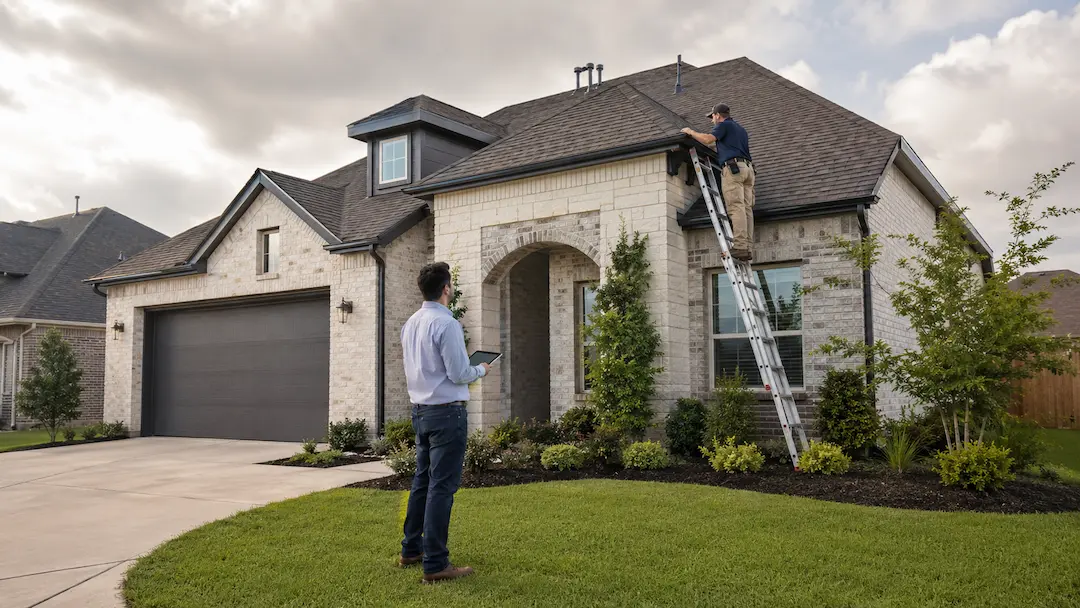
Buying a home is one of the largest financial decisions most people will make. While buyers often focus on the kitchen, bathrooms, floor plan, and neighborhood, the condition of the roof can have a major impact on the property’s value and future maintenance costs.
That is why scheduling a roof inspection before buying a house in Houston can be an important step in the home-buying process.
Houston roofs are regularly exposed to intense sunlight, high humidity, heavy rain, strong winds, hail, falling debris, and tropical weather. A roof may look acceptable from the ground while still having damaged shingles, deteriorated flashing, ventilation problems, previous leak repairs, or hidden moisture issues.
A professional roof inspection can help you better understand the condition of the roofing system before completing the purchase.
Is a General Home Inspection Enough?
A standard home inspection usually includes a visual evaluation of the roof and other major systems in the property.
The home inspector may examine accessible areas and report visible concerns involving the roof covering, flashing, drainage, penetrations, attic, or ventilation system. However, a general home inspection is not always the same as a detailed evaluation performed by an experienced roofing contractor.
Several conditions may limit how thoroughly a general inspector can examine the roof, including:
- A steep roof slope
- Wet or slippery roofing materials
- High winds or severe weather
- Limited roof access
- Multiple-story construction
- Fragile or damaged roofing materials
- Areas hidden beneath shingles or flashing
- Inaccessible attic sections
- Safety concerns
A home inspection is also generally visual and non-invasive. The inspector will not remove shingles, open the roof assembly, or expose hidden decking simply to determine what is underneath.
If the general inspection identifies concerns—or if the roof is older, has a history of leaks, or shows signs of storm damage—a specialized roof inspection may provide additional information before you move forward.
Why Houston Homebuyers Should Pay Close Attention to the Roof
Houston’s climate can be demanding on residential roofing systems.
Extended heat and sunlight can gradually age asphalt shingles. Heavy rain can expose weak flashing and drainage problems. Strong winds may lift or loosen roofing materials, while hail can damage shingles without creating an immediate visible leak.
Storm damage may also have occurred months or years before the home was listed.
Even when the seller reports that the roof is not leaking, there may still be:
- Hail impacts
- Lifted shingles
- Missing shingles
- Exposed fasteners
- Cracked sealant
- Damaged flashing
- Granule loss
- Soft roof decking
- Poor attic ventilation
- Previous repairs nearing failure
- Water stains from an older leak
Some roof problems develop slowly. A small flashing defect or lifted shingle may not cause noticeable interior damage until the next period of heavy rain.
A roof inspection gives buyers an opportunity to identify these concerns before they become the new owner’s responsibility.
What Does a Pre-Purchase Roof Inspection Include?
The exact scope depends on the property, roof design, weather conditions, and accessibility. However, a professional roofing contractor will typically evaluate the visible and accessible components of the roofing system.
Roofing Materials
The inspector examines the overall condition of the shingles or other roof covering.
For an asphalt shingle roof, the evaluation may look for:
- Missing shingles
- Cracked or broken shingles
- Curling edges
- Lifted tabs
- Loose materials
- Excessive granule loss
- Blistering
- Hail impacts
- Wind damage
- Uneven wear
- Exposed fasteners
- Previous patchwork
These conditions can help indicate whether the roof needs routine maintenance, targeted repairs, or complete replacement.
Flashing
Flashing helps direct water away from vulnerable transitions and roof penetrations.
The inspection may include visible flashing around:
- Chimneys
- Skylights
- Plumbing vents
- Roof-to-wall intersections
- Valleys
- Dormers
- HVAC penetrations
- Roof edges
Loose, damaged, missing, or improperly installed flashing is a common source of roof leaks.
Valleys and Drainage Areas
Roof valleys collect and direct significant amounts of rainwater.
An inspector may look for worn shingles, debris buildup, damaged valley materials, poor alignment, or evidence that water is not draining correctly.
The roof edges, gutters, and downspouts may also be reviewed for visible drainage concerns.
Roof Penetrations
Every opening in the roof creates a potential entry point for water.
The inspector may examine visible seals and protective components around:
- Plumbing pipes
- Exhaust vents
- Attic vents
- Satellite mounts
- Antennas
- Skylights
- Solar equipment
- Other roof-mounted systems
Deteriorated rubber boots, cracked sealants, and improperly installed penetrations may allow moisture to enter the roofing system.
Roof Decking
Most roof decking is covered by shingles and underlayment, so its complete condition cannot be confirmed without removing roofing materials.
However, an inspector may look for visible signs of possible decking problems, including:
- Sagging areas
- Uneven roof lines
- Soft spots
- Deterioration near roof edges
- Moisture stains in the attic
- Delaminated wood
- Evidence of past leaks
If significant damage is suspected, additional evaluation or repair may be recommended.
Attic and Ventilation
When the attic is accessible, it can provide valuable information about the roof’s condition.
The inspection may look for:
- Water stains
- Active moisture
- Mold-like growth
- Damaged insulation
- Daylight entering through openings
- Rusted fasteners
- Condensation
- Improper exhaust venting
- Inadequate intake or exhaust ventilation
- Damaged or sagging decking
Good ventilation helps manage heat and moisture inside the attic. Poor ventilation can contribute to premature roofing deterioration, moisture problems, and uncomfortable indoor temperatures.
Signs of Previous Repairs
Previous roof repairs are not automatically a problem. A properly completed repair may extend the service life of the roof.
However, buyers should understand what was repaired, why the work was needed, and whether the repair appears to have been completed correctly.
The inspector may identify:
- Mismatched shingles
- Excessive roof cement
- Improvised flashing
- Multiple patches
- Exposed nails
- Repaired leak areas
- Sections replaced at different times
- Work that may require further evaluation
Ask the seller for invoices, warranties, permits when applicable, and documentation related to previous roof repairs or replacement.
How Can You Tell How Old the Roof Is?
The seller may provide the installation date, but buyers should request supporting documentation whenever possible.
Useful records may include:
- The roofing contract
- Final invoice
- Warranty documents
- Material receipts
- Material receipts
- Permit records
- Insurance claim records
- Previous inspection reports
- Installation photographs
A roofing contractor may be able to provide a general estimate of the roof’s age based on visible wear and material condition. However, visual estimates are not always exact.
The condition of the roof can also matter more than the installation date alone. Two roofs of the same age may perform very differently depending on workmanship, ventilation, storm exposure, maintenance, and roofing materials.
Does an Older Roof Automatically Need Replacement?
No. Roof age is an important factor, but it is not the only factor.
An older roof may still be functional when it has been installed correctly, maintained regularly, properly ventilated, and protected from significant storm damage.
A newer roof may still have problems if it was installed incorrectly or damaged by hail or wind.
The inspector should consider the complete roofing system rather than making a recommendation based only on age.
Possible findings may include:
- No immediate roofing work needed
- Minor maintenance recommended
- Specific repairs recommended
- Further evaluation needed
- Limited remaining service life
- Roof replacement recommended
No inspector can guarantee exactly how many years a roof will last. The goal is to provide a reasonable professional assessment based on the conditions visible at the time of inspection.
Signs You Should Request a Specialized Roof Inspection
A separate roofing evaluation may be especially helpful when:
- The roof appears older
- The seller cannot confirm the installation date
- The home has experienced hail or windstorms
- The general inspector reports roofing concerns
- Water stains are visible inside the home
- The attic smells damp or musty
- Shingles appear missing, curled, or damaged
- The roofline appears uneven or sagging
- The home has received multiple roof repairs
- The roof has skylights, chimneys, or complex valleys
- Solar panels or other equipment penetrate the roof
- The property has been vacant
- The seller recently completed roofing work
- You have concerns about obtaining homeowners insurance
The inspection should be completed early enough in the purchasing process for you to review the findings and discuss your options with the appropriate real estate professionals.
Can Roof Condition Affect Homeowners Insurance?
Yes. The age, condition, and type of roof may affect homeowners insurance availability, pricing, deductibles, and coverage.
Some insurance policies provide replacement cost coverage, while others may pay only the roof’s depreciated value through actual cash value coverage. An older or poorly maintained roof may also be subject to coverage limitations.
Do not wait until closing to investigate insurance.
Before purchasing the home, contact your insurance agent and provide accurate information about:
- Roof age
- Roofing material
- Current condition
- Previous claims
- Known storm damage
- Recent repairs
- Replacement history
Ask whether the insurer requires photographs, a roof certification, repair documentation, or another type of inspection before issuing coverage.
A roofing contractor does not determine whether a property is insurable. However, a professional roof inspection can provide condition information that may help you communicate with your insurance provider.
What Happens If the Inspection Finds Roof Damage?
Finding roof damage does not automatically mean you should abandon the purchase.
The next step depends on the severity of the problem, the estimated cost, your purchase agreement, and the advice of your real estate professionals.
Depending on the situation, buyers may discuss options such as:
- Asking the seller to complete repairs
- Requesting a qualified roofing contractor
- Negotiating a credit or price adjustment
- Asking for additional documentation
- Requesting roof replacement
- Obtaining multiple roofing estimates
- Moving forward while budgeting for future work
- Reconsidering the purchase if the damage is extensive
Repairs should be based on the actual condition of the roof—not simply on the desire to complete the transaction quickly.
A temporary patch may stop a visible leak without addressing damaged decking, poor flashing, widespread shingle deterioration, or other underlying problems.
Should the Seller Replace the Roof Before Closing?
Not necessarily.
A complete replacement may be appropriate when the roof has widespread damage, active leaks, significant decking deterioration, or limited remaining service life. However, minor or localized issues may only require repairs.
Before asking for a replacement, obtain a clear inspection report and written estimate.
Buyers should also understand who will select the contractor, materials, warranty, and scope of work. A seller focused on closing quickly may choose the lowest-cost option, which may not match the quality or roofing system the buyer would select.
In some cases, buyers may prefer to negotiate the financial terms and manage the roof work after taking ownership. The best option depends on the transaction and should be discussed with your real estate agent, attorney, lender, and insurance provider as appropriate.
How Much Could an Undetected Roof Problem Cost?
The financial impact depends on the type and extent of the damage.
A relatively small roofing problem may require replacing a pipe boot, resealing flashing, or repairing a limited number of shingles.
A more serious issue may involve:
- Large roof sections
- Damaged underlayment
- Rotted decking
- Attic insulation
- Interior ceilings
- Wall damage
- Mold remediation
- Complete roof replacement
The roof can also affect other parts of the property. Water intrusion may damage insulation, drywall, electrical components, framing, paint, flooring, and personal belongings.
Spending time evaluating the roof before buying the house may help you avoid unexpected expenses after closing.
Questions to Ask About the Roof Before Buying
Ask the seller, inspector, or roofing contractor:
- When was the roof installed?
- Who installed it?
- Are invoices or installation records available?
- Has the roof ever leaked?
- Were repairs completed after a storm?
- Has an insurance claim been filed?
- Is the manufacturer warranty transferable?
- Is the workmanship warranty transferable?
- Are there any active roofing concerns?
- Does the attic show evidence of moisture?
- Are repairs currently recommended?
- What is the general condition of the shingles?
- Is the ventilation system adequate?
- Is replacement likely in the near future?
Do not rely exclusively on verbal answers. Request written documents whenever possible.
What Should Be Included in the Inspection Report?
A useful roofing report should clearly describe the conditions observed during the inspection.
Depending on the service provided, the report may include:
- Photographs of affected areas
- A description of visible damage
- Roof material and general condition
- Areas that could not be accessed
- Signs of previous repairs
- Potential leak locations
- Maintenance recommendations
- Recommended repairs
- Replacement considerations
- Suggested next steps
The report should distinguish between visible facts, professional opinions, and areas that could not be fully evaluated.
Be cautious of anyone who guarantees that a roof will remain problem-free for a specific number of years based only on a visual inspection.
Roof Inspection Before Buying a House: Final Takeaway
So, do you need a roof inspection before buying a house in Houston?
A general home inspection is an important starting point, but a specialized roof inspection may provide additional information when the roof is older, damaged, difficult to access, previously repaired, or exposed to severe weather.
The inspection can help you understand the roof’s current condition, identify visible damage, estimate possible repair needs, review available documentation, and ask better questions before completing the purchase.
It can also help prevent a major roofing expense from becoming an unexpected surprise shortly after closing.
Rhinovations Inc. provides professional roof inspections, repairs, replacements, leak detection, and storm damage services for homeowners throughout Greater Houston. Our team understands how Southeast Texas heat, humidity, hail, wind, and heavy rain affect residential roofing systems.
Contact Rhinovations Inc. to request a roof inspection and gain a clearer understanding of the roof before making your final purchasing decision.
Frequently Asked Questions
A general home inspection normally includes a visual evaluation of accessible roof components. However, accessibility, weather, roof slope, safety conditions, and the inspection’s scope may limit how closely the roof can be examined.
A roofing contractor may be helpful when the home inspector identifies concerns, the roof is older, the installation date is unknown, or the property has experienced hail, wind, leaks, or previous roof repairs.
An inspection may identify stains, moisture, damaged materials, or other evidence of leaks. However, a visual inspection cannot guarantee the discovery of every concealed or intermittent leak.
It depends on the insurer, roof condition, material, age, location, and policy. Some insurers may limit coverage, require repairs, use actual cash value coverage, or decline to cover a roof in poor condition.
Inspection findings and repair estimates may help buyers understand potential costs and discuss available options with their real estate professionals. The specific rights and deadlines depend on the purchase agreement.
Keep a copy for your records and share it with your real estate agent, insurance provider, attorney, lender, or other professional when appropriate.